
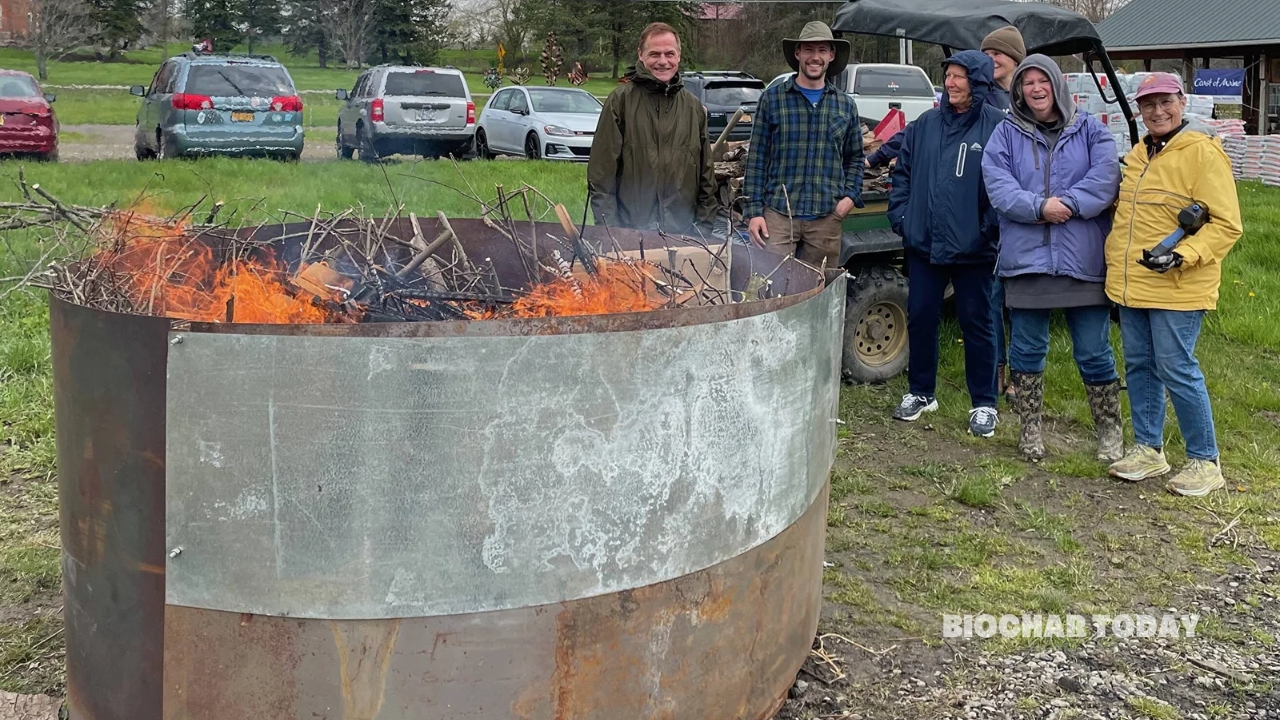
On April 4, 2026, Henry’s Gardens in Eden, New York, will host a practical biochar demonstration in collaboration with the BiocharBiochar is a carbon-rich material created from biomass decomposition in low-oxygen conditions. It has important applications in environmental remediation, soil improvement, agriculture, carbon sequestration, energy storage, and sustainable materials, promoting efficiency and reducing waste in various contexts while addressing climate change challenges. More Coalition. This event in the United States is designed to provide a hands-on learning environment, moving beyond theoretical lectures to showcase the actual creation of carbon-rich materials. By integrating the demonstration with seasonal community activities, such as an Easter egg hunt and coloring contests, the organizers aim to engage a diverse demographic, ranging from professional cultivators to local families.
A significant challenge facing the decentralized biochar industry is the gap between theoretical knowledge and practical implementation among small-scale land managers and home gardeners. While the benefits of soil amendmentA soil amendment is any material added to the soil to enhance its physical or chemical properties, improving its suitability for plant growth. Biochar is considered a soil amendment as it can improve soil structure, water retention, nutrient availability, and microbial activity. More are well-documented in academic and industrial circles, many potential users remain unfamiliar with the specific logistics of low-oxygen biomassBiomass is a complex biological organic or non-organic solid product derived from living or recently living organism and available naturally. Various types of wastes such as animal manure, waste paper, sludge and many industrial wastes are also treated as biomass because like natural biomass these More conversion. Without direct observation of the “burn” process, there is often a barrier to entry regarding safety, feedstockFeedstock refers to the raw organic material used to produce biochar. This can include a wide range of materials, such as wood chips, agricultural residues, and animal manure. More preparation, and the technical requirements of maintaining a controlled, low-oxygen environment.
The solution presented by Henry’s Gardens and the Biochar Coalition involves a transparent, live-action demonstration of the pyrolysisPyrolysis is a thermochemical process that converts waste biomass into bio-char, bio-oil, and pyro-gas. It offers significant advantages in waste valorization, turning low-value materials into economically valuable resources. Its versatility allows for tailored products based on operational conditions, presenting itself as a cost-effective and efficient More process. By utilizing wood and plant waste to create biochar on-site, the demonstration demystifies the production cycle for the public. This approach allows attendees to observe the physical transformation of waste into a value-added soil amendment. Furthermore, the inclusion of the Biochar Coalition ensures that the technical aspects of the demonstration are handled by experts capable of explaining the nuances of carbon sequestration and soil health to an audience with varying levels of expertise.
The primary outcome of this initiative is the localized dissemination of biochar production techniques, which strengthens the regional knowledge base in Western New York. By providing a tangible reference point for the community, Henry’s Gardens fosters an environment where sustainable waste management and soil restoration become accessible practices. This event serves as a model for how industrial concepts can be integrated into community-centric programming to increase the adoption of carbon-negative technologies at the grassroots level.


Leave a Reply