

In a recent study published in the Journal of Agricultural Science and Technology, researchers Kamal Khalkhal, Adel Reyhanitabar, Shahin Oustan, and Nasser Aliasgharzad explored how different types of biocharBiochar is a carbon-rich material created from biomass decomposition in low-oxygen conditions. It has important applications in environmental remediation, soil improvement, agriculture, carbon sequestration, energy storage, and sustainable materials, promoting efficiency and reducing waste in various contexts while addressing climate change challenges. More affect the quality of compost made from municipal solid waste (MSW)Municipal Solid Waste (MSW) is the everyday trash or garbage produced by households and businesses. It includes a variety of materials, such as food scraps, paper, plastics, and yard waste. MSW forms a potential feedstock category for biochar production provided that it should be free More. The study revealed that activating biochar, especially with sodium hydroxide (NaOH), significantly enhances compost quality. In fact, compost treated with NaOH-activated biochar showed a germination index of 130.9%, indicating reduced phytotoxicity and improved compost maturity.
Municipal solid waste (MSW) is a growing global problem. In the Middle East, organic waste makes up about 65% of MSW, and a lot of it ends up in landfills. Composting is a good way to handle organic MSW, turning it into a useful fertilizer and cutting down on disposal costs. However, composting can have issues like greenhouse gas emissions and nitrogen loss. To fix these problems, researchers are looking at “co-composting,” where additives like biochar are mixed in at the start.
Biochar is a material with a porous structure and other qualities that can help with composting. This study looked at how different sizes of biochar and activated biochar affect the final compost quality.
The researchers mixed MSW with different-sized biochar and activated biochar and composted the mixtures for 90 days. They measured various properties of the compost, including temperature, pHpH is a measure of how acidic or alkaline a substance is. A pH of 7 is neutral, while lower pH values indicate acidity and higher values indicate alkalinity. Biochars are normally alkaline and can influence soil pH, often increasing it, which can be beneficial More, electrical conductivity (EC), organic matter (OM), and nitrogen content.
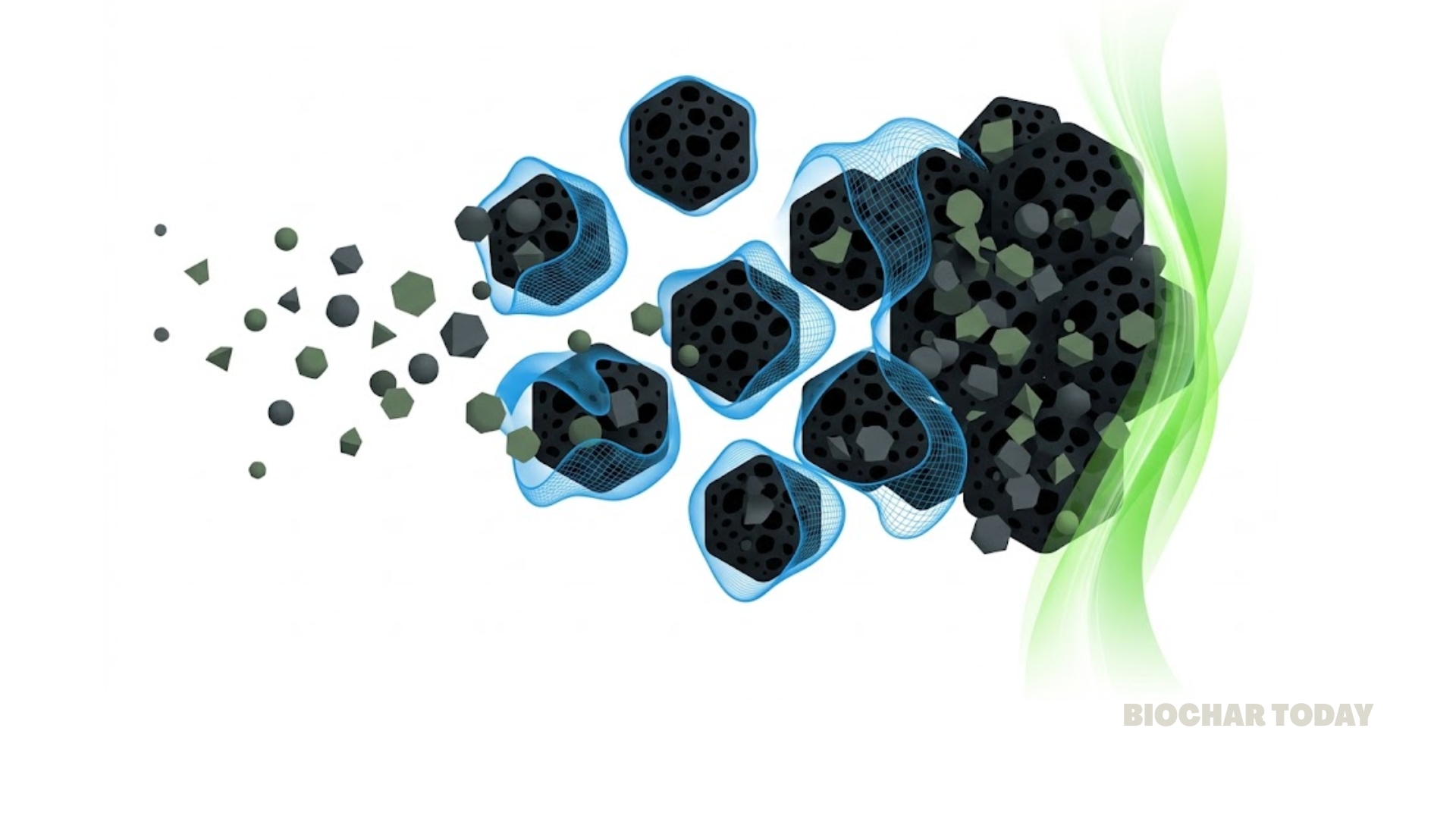
One key finding was that activating biochar changes its surface, creating a mesh-like structure. This change improves the biochar’s ability to enhance the composting process. Adding biochar also increased the temperature during the thermophilic phase, which is important for breaking down organic matter. The study also found that different biochar treatments affected the compost’s pH, EC, and OM content. For example, the highest OM content (37.9%) was found in compost treated with 10% of 1-2mm sized biochar. The lowest electrical conductivity, indicating lower salinity, was also observed in the compost with 10% of 1-2mm sized biochar.
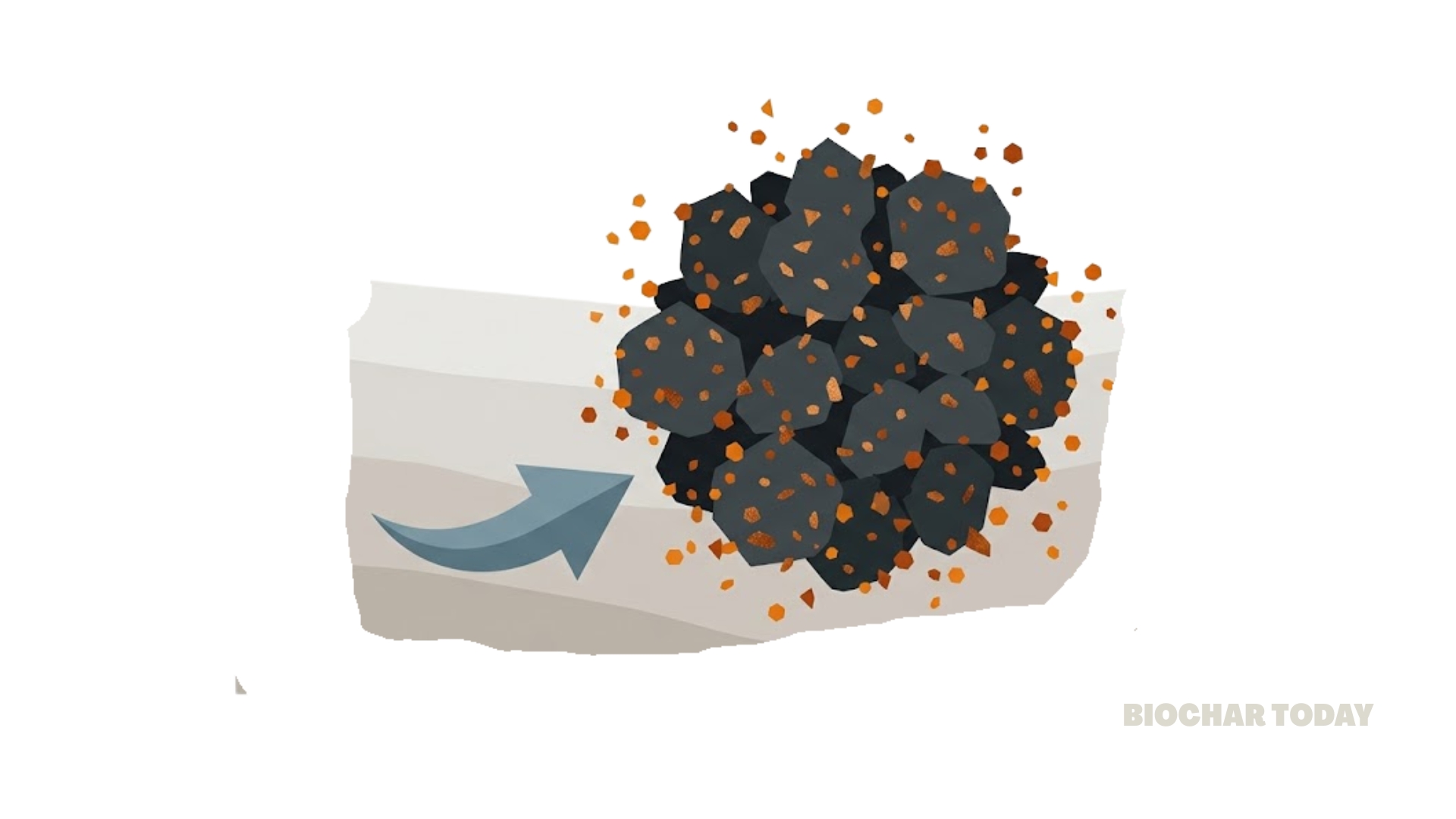
Nitrogen is a critical nutrient in compost. The researchers looked at different forms of nitrogen in the compost. They found that biochar, especially activated biochar, helped to reduce nitrogen loss during composting. The carbon to nitrogen (C/N) ratio is another important indicator of compost quality. The study showed that adding biochar helped to maintain a good C/N ratio.
The researchers also looked at humification, which is the process of organic matter breaking down into stable humus. They found that biochar increased humification. Overall, the study suggests that using activated biochar, especially NaOH-activated biochar, is a promising way to improve the composting of municipal solid waste.
Source: Khalkhal, K., Reyhanitabar, A., Oustan, S., & Aliasgharzad, N. (in press). Co-composting of municipal solid waste with activated biochar: A promising approach to improve the quality of compost. Journal of Agricultural Science and Technology (JAST), 28(2).



Leave a Reply