
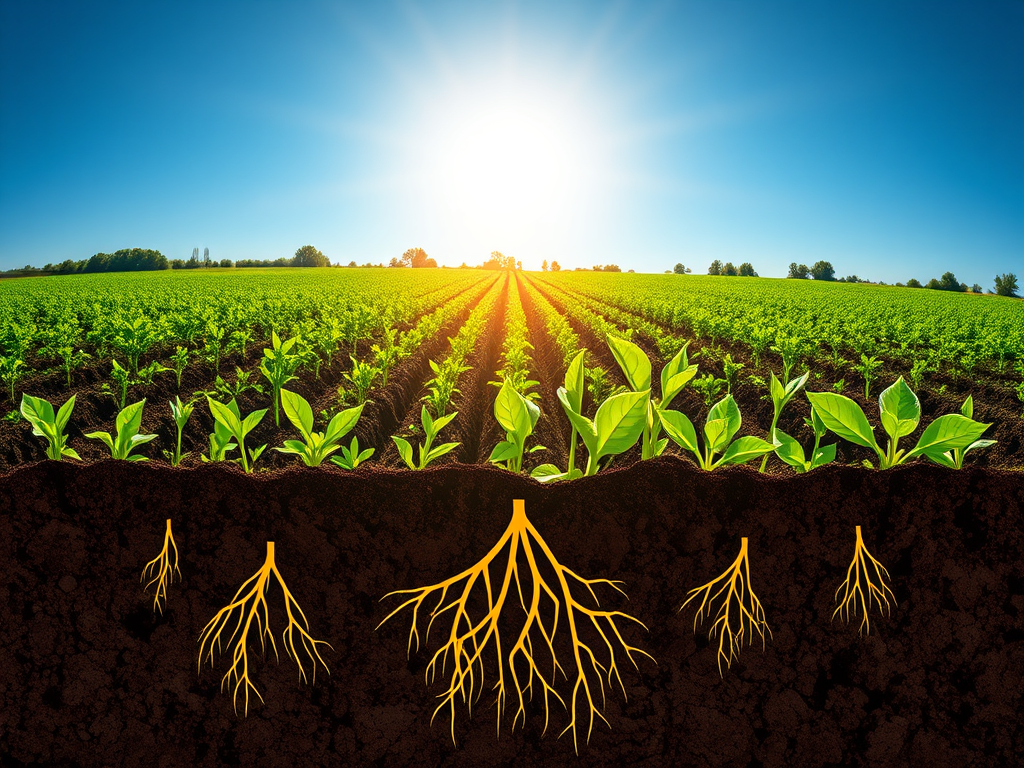
A recent study published in the Journal of Advances in Civil Engineering Researches by Sanjeev Kumar explores the potential of biocharBiochar is a carbon-rich material created from biomass decomposition in low-oxygen conditions. It has important applications in environmental remediation, soil improvement, agriculture, carbon sequestration, energy storage, and sustainable materials, promoting efficiency and reducing waste in various contexts while addressing climate change challenges. More to improve the physical properties of soil. The review of existing literature indicates that applying biochar at a concentration of 1-2% reduces soil bulk density and increases soil porosityPorosity of biochar is a key factor in its effectiveness as a soil amendment and its ability to retain water and nutrients. Biochar’s porosity is influenced by feedstock type and pyrolysis temperature, and it plays a crucial role in microbial activity and overall soil health. Biochar More and infiltration rate. This amendment ultimately increases the total porosity of the soil, creating a better environment for root activity and crop growth.
Soil stabilization is a technique used in the construction of roads, pavements, and foundations. It improves the soil’s engineering properties, such as strength and durability. Biochar, a material rich in carbon, is produced from biomassBiomass is a complex biological organic or non-organic solid product derived from living or recently living organism and available naturally. Various types of wastes such as animal manure, waste paper, sludge and many industrial wastes are also treated as biomass because like natural biomass these More through a process called thermochemical conversion and can be used for soil stabilization. It increases soil organic carbon content, which is essential for improving soil physical properties and fertility.
Biochar has been used in agriculture and environmental remediation, but its use in civil engineering is still being studied. The properties of biochar vary depending on the biomass used and the production process. Different types of biochar affect soil physical properties differently, depending on the soil type and climatic conditions.
Soil physical conditions, including water holding capacityWater holding capacity is the amount of water that soil can retain. Biochar can significantly increase the water holding capacity of soil, improving its ability to withstand drought conditions and support plant growth. More, aeration, and soil strength, are critical for soil productivity and crop growth. Biochar improves these conditions due to its high porosity and large surface area. The application of biochar decreases soil bulk density and increases soil porosity. The optimal application of biochar enhances soil structure, creating an ideal medium for water and nutrient movement, which is essential for plant uptake and growth.
This research highlights that biochar is a promising soil amendmentA soil amendment is any material added to the soil to enhance its physical or chemical properties, improving its suitability for plant growth. Biochar is considered a soil amendment as it can improve soil structure, water retention, nutrient availability, and microbial activity. More that can improve soil physical properties. The study emphasizes the importance of considering biochar and soil types to optimize its application in sustainable subgrade practices.
Source: Kumar, S. (2025). Sustainable Soil Stabilization: Evaluating the Potential of Biochar for Expansive Soil Subgrade Improvement. Journal of Advances in Civil Engineering Researches, 1(1)




Leave a Reply