
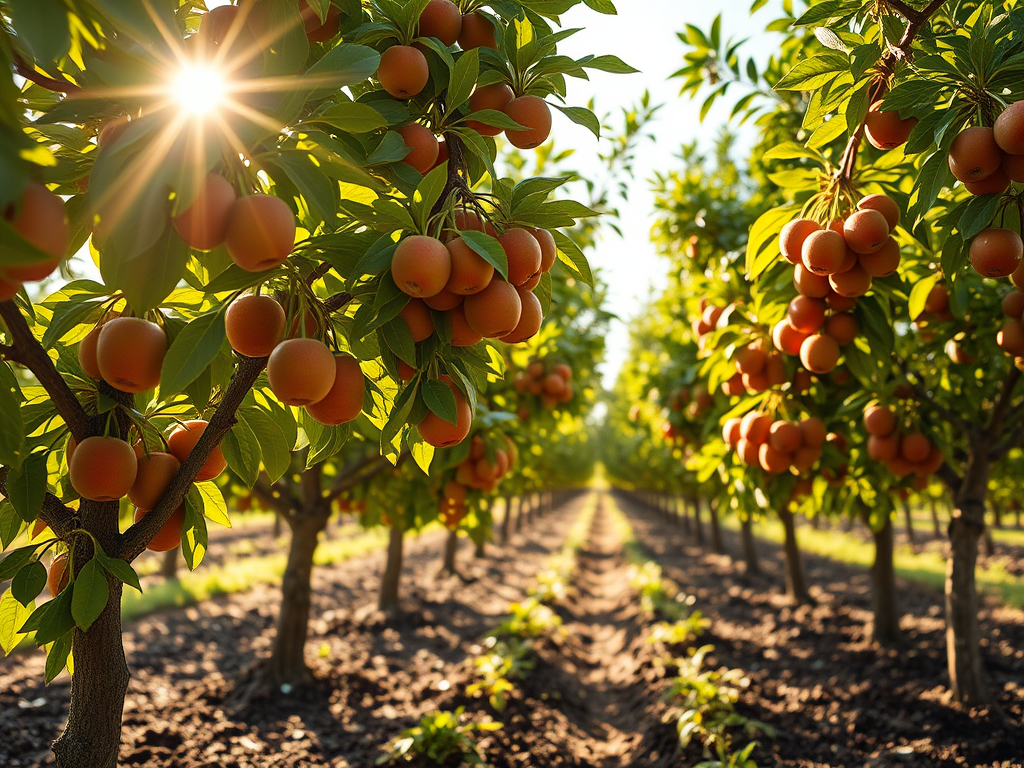
Cultivating crops in saline-alkali soils, particularly in arid regions like southern Xinjiang, China, is a significant challenge for sustainable agriculture. These soils are often degraded, with poor structure, low fertility, and high salt content, which impairs plant growth and fruit quality. A new study, “BiocharBiochar is a carbon-rich material created from biomass decomposition in low-oxygen conditions. It has important applications in environmental remediation, soil improvement, agriculture, carbon sequestration, energy storage, and sustainable materials, promoting efficiency and reducing waste in various contexts while addressing climate change challenges. More and Nitrogen Fertilizer Synergies: Enhancing Soil Properties and Jujube Fruit Quality in Saline-Alkali Orchards of Southern Xinjiang,” by Haoyang Liu, Yunqi Ma, Yuxuan Wei, Cuiyun Wu, and Yuyang Zhang, and published in the journal Agronomy, investigates a promising solution: the co-application of biochar and nitrogen fertilizer. Their research provides a strategic blueprint for using moderate biochar application to improve soil health and enhance the quality and yield of the economically important jujube fruit.
The researchers conducted a field experiment with different biochar and nitrogen fertilizer combinations to see how they would affect the soil and the fruit. They found that a moderate biochar application rate, labeled BC1, was the optimal amount. This treatment led to significant increases in soil nutrients, with the BC1+N2 treatment achieving the highest total carbon and total nitrogen concentrations, with increases of 12.4% and 21.42%, respectively, when compared to the control group. The BC1 + UI-N treatment also produced a notable increase in soil organic matter, ranging from 9.20% to 14.51%. These soil improvements are critical because they create a more favorable environment for plant growth by enhancing nutrient availability and promoting healthier soil. The study also noted that the treatments helped modulate soil microelement profiles, suppressing potentially toxic elements like copper and manganese while enhancing the availability of beneficial elements like magnesium and iron.
Beyond just improving the soil, the study’s most important findings relate to the direct impact on the jujube trees and their fruit. The co-application of biochar and nitrogen fertilizer significantly improved fruit performance. The optimal treatment, which involved a moderate application of biochar (BC1) with nitrogen fertilizer, increased per-tree yield by an impressive 24.23% compared to the control group. This increase is particularly significant given the challenging soil conditions. The authors note that this finding aligns with previous meta-analyses that reported yield increases in the 10%–30% range for biochar applications. Furthermore, the fruit quality was also enhanced, with the vitamin C content increasing by 16.47%. These improvements are a direct result of the synergistic relationship between the biochar and the fertilizer, which collectively regulate soil-microbe-plant interactions.
The researchers also delved into the complex mechanisms behind these positive outcomes. Their analysis revealed that the biochar-nitrogen combinations restructured both bacterial and fungal communities in the soil, with the BC1 + NI-N treatment showing superior bacterial diversity. The study highlights how the moderate biochar application improves soil physicochemical properties, such as water retention and porosityPorosity of biochar is a key factor in its effectiveness as a soil amendment and its ability to retain water and nutrients. Biochar’s porosity is influenced by feedstock type and pyrolysis temperature, and it plays a crucial role in microbial activity and overall soil health. Biochar More, which creates a better environment for root development and nutrient uptake. The biochar also acts as a habitat for beneficial microorganisms, which intensifies nutrient cycling. The study’s use of a piecewise structural equation model also confirmed the causal pathways from the fertilizer treatments to soil chemistry, microbial diversity, and ultimately, fruit performance. The model was highly predictive, explaining 95% of the variance in yield and 94% in vitamin C content. This comprehensive analysis provides a strong scientific foundation for implementing precision agriculture in arid saline-alkali regions, offering a sustainable way to restore soil health and improve specialty fruit production.
SOURCE: Liu, H., Ma, Y., Wei, Y., Wu, C., & Zhang, Y. (2025). Biochar and Nitrogen Fertilizer Synergies: Enhancing Soil Properties and Jujube Fruit Quality in Saline-Alkali Orchards of Southern Xinjiang. Agronomy, 15(9), 2205.



Leave a Reply