
Key Takeaways
- Combining biocharBiochar is a carbon-rich material created from biomass decomposition in low-oxygen conditions. It has important applications in environmental remediation, soil improvement, agriculture, carbon sequestration, energy storage, and sustainable materials, promoting efficiency and reducing waste in various contexts while addressing climate change challenges. More with earthworms creates a powerful natural team that cleans up medicine residues in the ground.
- Certain earthworm species can break down nearly all traces of specific antibiotics found in contaminated soil.
- Biochar works like a sponge to trap harmful chemicals while earthworms act as tiny workers that digest and destroy them.
- This natural cleaning method helps protect our food supply and health by keeping medicines out of plants and water.
- Using farm waste to create biochar provides a cheap and eco-friendly way to fix damaged land without using harsh chemicals.
The journal Environmental Processes recently published a comprehensive review by Michail Lykouras, Ekavi-Aikaterini Isari, Eleni Grilla, Petros Kokkinos, and Ioannis K. Kalavrouziotis. Their research examines the growing global threat posed by pharmaceutical residues in soil, which enter the environment through human and animal waste, hospital runoff, and improper drug disposal. These compounds, which include antibiotics, painkillers, and hormones, often persist in the ground and can eventually reach our food and water supplies. The authors sought to evaluate how natural materials and organisms can be used to effectively remove these pollutants.
Biochar has a massive internal surface area and a porous structure that allows it to trap and hold onto medicine molecules. For example, biochars made from wheat and corn stalks can achieve adsorption capacities of approximately 3 milligrams per gram for certain hormones. By immobilizing these chemicals, biochar prevents them from washing away into groundwater or being taken up by growing crops. It also serves as a stable home for the beneficial bacteria that help break down complex chemical structures.
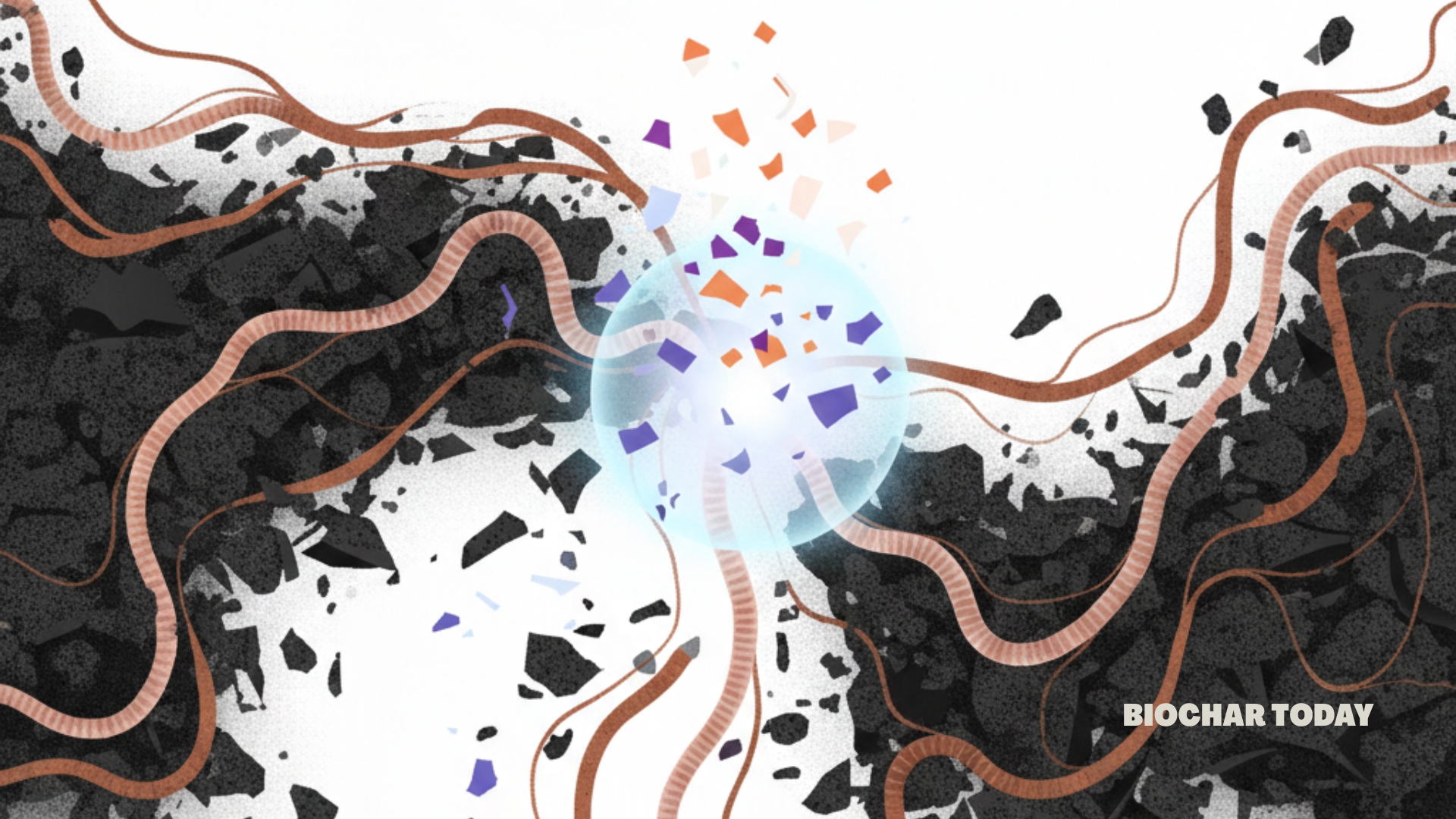
Earthworms provide a second, active layer of protection through a process called vermiremediation. As earthworms move through the soil, they eat contaminated organic matter and pass it through their digestive systems. Inside the gut of a worm like the common red wiggler, specialized microbes and enzymes work to break apart pharmaceutical molecules. Research shows that certain species are remarkably efficient; for instance, some worms can remove over 80 percent of tetracycline antibiotics within a few weeks. The earthworms also improve soil health by creating tunnels that allow air and water to reach deep into the ground, which further stimulates the natural cleaning power of the soil.
The most exciting findings involve the synergy between biochar and earthworms working together. When biochar is added to the soil, it can reduce the toxicity of the medicines, making it safer for the earthworms to do their job. In turn, the earthworms help spread the biochar and the helpful bacteria throughout the soil. In one documented case, the use of a specific earthworm species led to the nearly complete removal of an antibiotic, reaching a 99.55 percent success rate. While some drugs are more stubborn than others, this combined approach offers a highly effective and low-cost solution for cleaning up large areas of contaminated land.
This natural method of soil cleanup is particularly important because it does not create new toxic by-products. Unlike some industrial cleaning methods that use harsh chemicals, the biochar and earthworm approach is entirely eco-friendly and helps restore the natural balance of the environment. The study concludes that using these tools can significantly reduce the risks to public health and support global efforts for a more sustainable future. By turning agricultural waste into biochar and using earthworms as natural cleaners, we can protect our soil and ensure that our water and food remain safe from pharmaceutical pollution.
Source: Lykouras, M., Isari, E. A., Grilla, E., Kokkinos, P., & Kalavrouziotis, I. K. (2026). The role of biochar and earthworms in pharmaceutical remediation of contaminated soil: A systematic review. Environmental Processes, 13(2).


Leave a Reply