
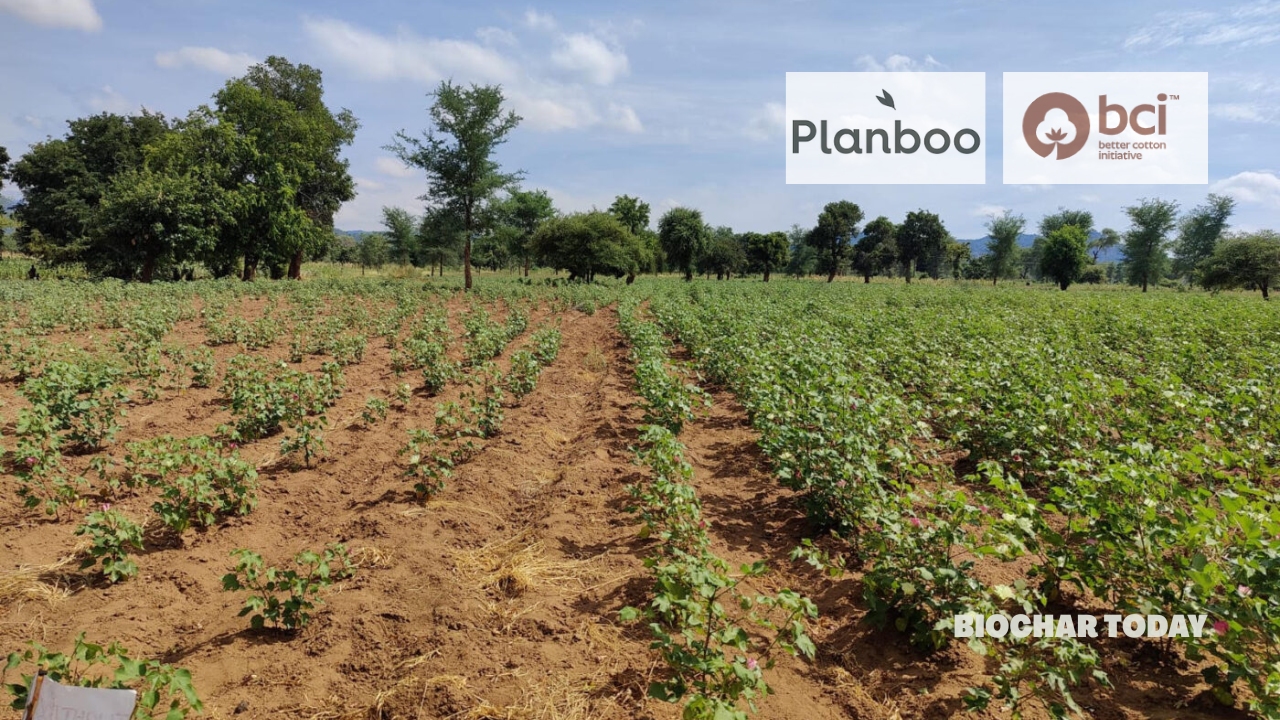
The Better Cotton Initiative (BCI) and climate technology startup Planboo have announced a collaborative pilot project in India designed to integrate biocharBiochar is a carbon-rich material created from biomass decomposition in low-oxygen conditions. It has important applications in environmental remediation, soil improvement, agriculture, carbon sequestration, energy storage, and sustainable materials, promoting efficiency and reducing waste in various contexts while addressing climate change challenges. More production into the cotton supply chain. Scheduled to commence in February 2026, the initiative will engage 75 farmers in the states of Gujarat and Maharashtra to convert agricultural waste from the January cotton harvest into biochar. This project aims to establish a measurable framework for environmental improvement by utilizing biochar to enhance soil productivity and sequester atmospheric carbon. By focusing on field-level implementation, the organizations seek to assess the scalability of biochar application within the broader global cotton sector.
A primary challenge addressed by this initiative is the prevalent practice of crop residue burning, which contributes significantly to air pollution and local health hazards while losing valuable organic matter. In addition to the atmospheric impact, cotton farmers often face declining soil fertility and the physical risks associated with climate change, such as reduced water retention in agricultural lands. Furthermore, the textile industry lacks streamlined mechanisms to accurately measure and monetize carbon removals within its complex supply chain. These intertwined issues—waste management, soil degradation, and the need for verifiable carbon data—represent significant hurdles to achieving sustainable agricultural production.
To address these challenges, the project will install three specialized kilns capable of processing 375 tonnes of agricultural waste into approximately 60 to 70 tonnes of biochar. Farmers will receive technical training on kiln operation, transitioning them from traditional burning to a controlled carbonization process. Planboo will deploy its digital Measurement, Reporting, and Verification (MRVin) system to track the entire lifecycle of the biochar, from initial waste input to final carbon sequestration. This technology ensures the quantification of carbon removals in alignment with the Global Artisan C-Sink Guidelines, providing the rigorous data required for carbon certification and potential credit generation.
The anticipated outcomes of the project include improved soil health, increased water retention, and a notable reduction in farm-level greenhouse gas emissions. By converting cotton stalks into stable carbon, the project creates a durable sink that stores carbon in the ground for over a century. Economically, the initiative aims to establish new income streams for farming communities through the sale of high-value carbon removal credits. For the textile industry, the project provides a pathway to address Scope 3 emissions, offering retailers and brands a model for supply chain decarbonization and regenerative agricultural practices.




Leave a Reply