
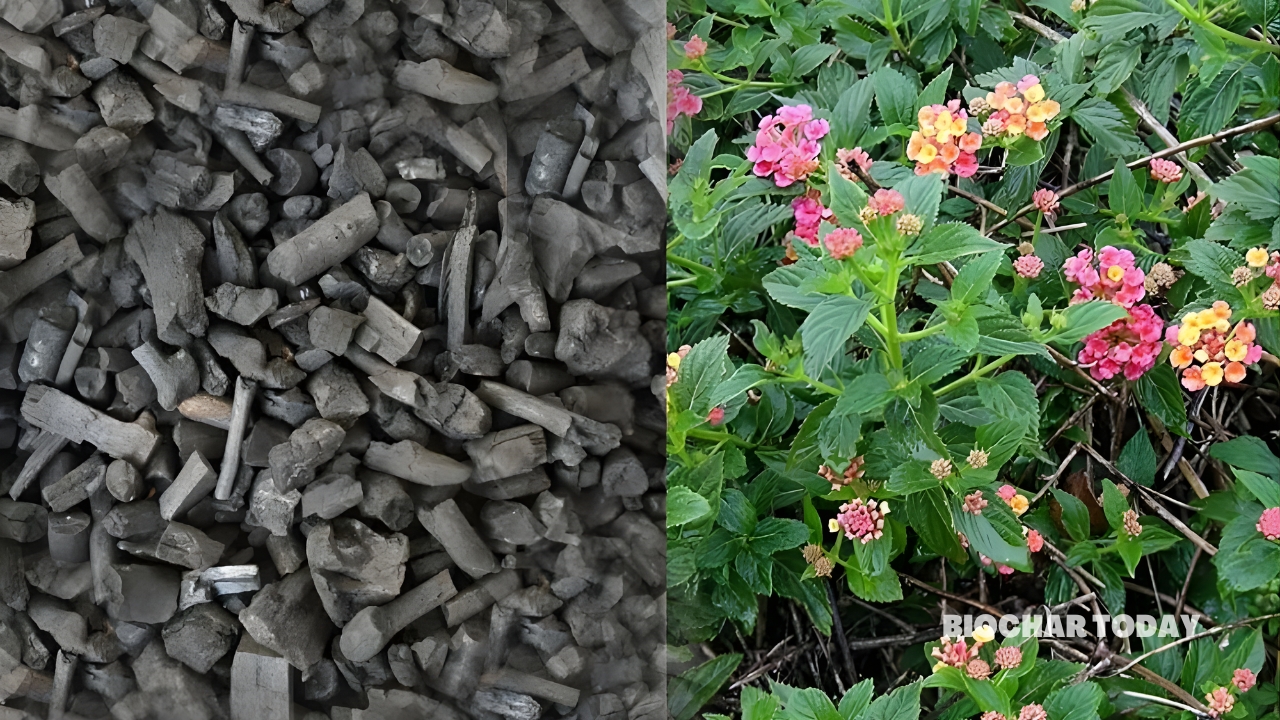
The Amrabad Tiger Reserve (ATR) in India recently initiated a pilot project designed to convert the invasive weed Lantana camara into biocharBiochar is a carbon-rich material created from biomass decomposition in low-oxygen conditions. It has important applications in environmental remediation, soil improvement, agriculture, carbon sequestration, energy storage, and sustainable materials, promoting efficiency and reducing waste in various contexts while addressing climate change challenges. More. This first-of-its-kind initiative in the region seeks to address the ecological degradation caused by the rapid spread of invasive flora while simultaneously exploring new economic avenues for local communities. Led by Nagarkurnool District Forest Officer Revanth Chandra, the project successfully demonstrated the technical feasibility of processing lantana biomassBiomass is a complex biological organic or non-organic solid product derived from living or recently living organism and available naturally. Various types of wastes such as animal manure, waste paper, sludge and many industrial wastes are also treated as biomass because like natural biomass these More into biochar, producing an initial yield of approximately 3 kilograms during the trial phase to establish a proof of concept for future scaling.
The primary challenge addressed by this project is the aggressive encroachment of lantana, which currently covers an estimated 25 percent of the reserve’s land area. This invasive species suppresses the growth of native grasses, which are essential for the herbivore populations that sustain the reserve’s apex predators. Historically, efforts to manage lantana have been hindered by high labor requirements and the lack of a productive disposal method for the cleared biomass. Previously, the uprooted material was either left to decay in situ or contributed to fuel loads for seasonal forest fires, neither of which provided a long-term solution to the infestation.
To resolve these issues, forest officials implemented a thermochemical conversion process to transform the harvested lantana into biochar. By shifting the perspective of lantana from a waste product to a resource, the ATR administration aims to involve Joint Forest Management Committees and local tribal populations in the collection and processing stages. This strategic approach utilizes the carbonization of invasive biomass to create a value-added product that can be sold or utilized for soil enhancement, thereby incentivizing the continuous removal of the weed through a localized green economy.
The outcomes of the pilot project indicate significant potential for both ecological and economic benefits. With lantana biochar valued at approximately ₹7,000 per tonne, the initiative offers a sustainable income stream for rural and tribal communities without depleting forest resources. Beyond the economic incentives, the systematic removal of the canopy-smothering weed is expected to facilitate habitat restoration, allowing native vegetation to return and stabilizing the wildlife food chain. Following the success of the pilot, officials plan to scale operations to cover larger portions of the reserve through increased community participation.


Leave a Reply