
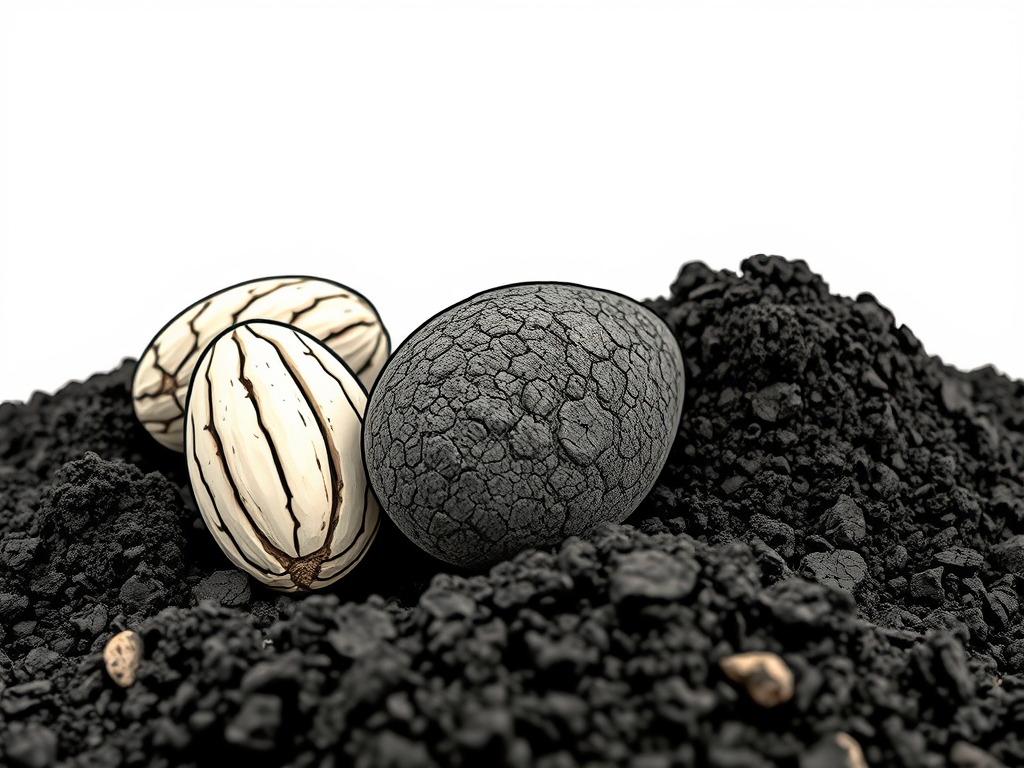
Thao et al. published a study in Sustainable Environment that examines the impact of almond shell biocharBiochar is a carbon-rich material created from biomass decomposition in low-oxygen conditions. It has important applications in environmental remediation, soil improvement, agriculture, carbon sequestration, energy storage, and sustainable materials, promoting efficiency and reducing waste in various contexts while addressing climate change challenges. More on soil’s physical and hydraulic properties. The research found that high application rates of biochar slightly improved water stable aggregates (WSA) by 3.8% to 5.3%. However, the study also noted that biochar had marginal effects on improving overall soil hydraulic properties.
This research explored biochar produced from almond shells at two different temperatures (350°C and 700°C) and particle sizes (less than 250 µm or 1-2 mm), applied at rates of 10 ton/ha or 60 ton/ha to a coarse-textured soil. The analysis showed that while biochar increased cation exchange capacity (CEC) and specific surface area (SSA)—properties often associated with soil fertility and pollutant retention—its effects on key hydraulic properties like soil water retention and hydraulic conductivity were not substantial.
The study’s findings suggest that almond-shell-derived biochar has a limited impact on loamy sand soil properties, particularly regarding water retention in the short term. This nuanced outcome adds to the ongoing discussion about biochar’s role in soil management and highlights the importance of considering specific biochar types and soil conditions.
SOURCE: Thao, T., Lopez, V. D., Gonzales, M., Berhe, A. A., Diaz, G., & Ghezzehei, T. A. (2025). Impact of almond shell biochar properties and application rate on soil physical and hydraulic characteristics. Sustainable Environment, 11(1), 2485688.




Leave a Reply