
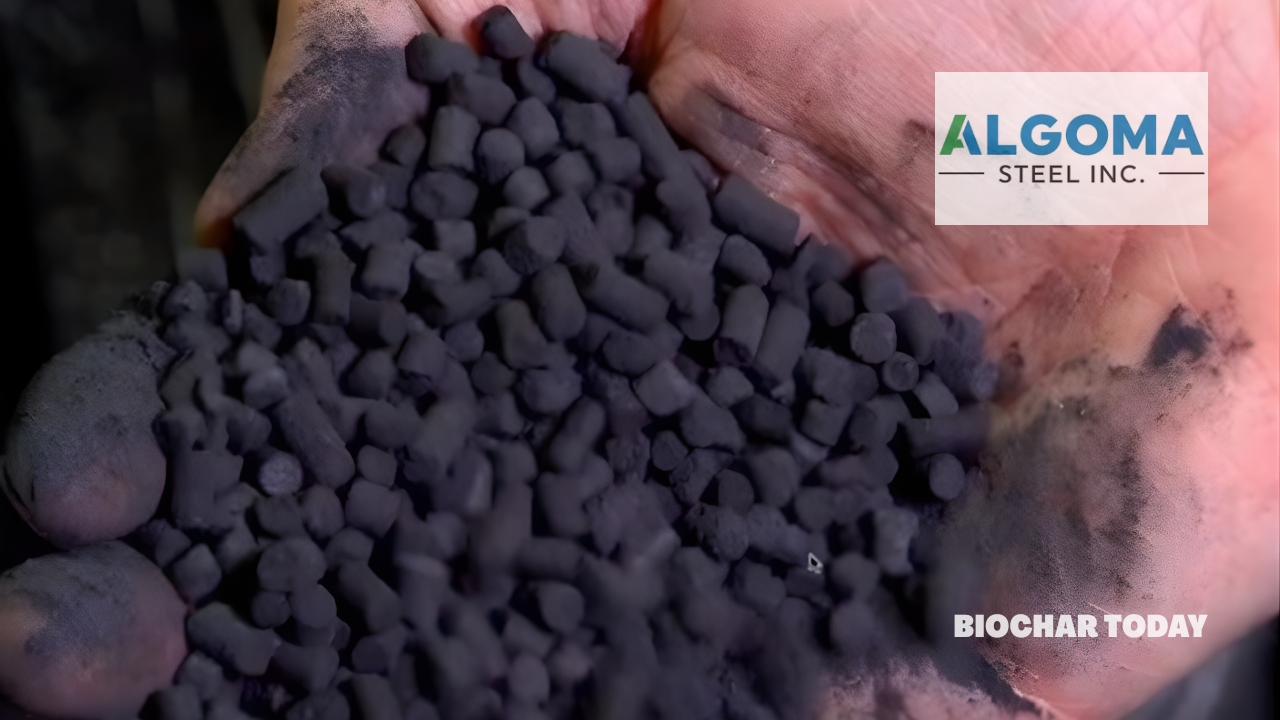
In early February 2026, the Sault Ste. Marie City Council in Canada passed a resolution to explore biocharBiochar is a carbon-rich material created from biomass decomposition in low-oxygen conditions. It has important applications in environmental remediation, soil improvement, agriculture, carbon sequestration, energy storage, and sustainable materials, promoting efficiency and reducing waste in various contexts while addressing climate change challenges. More production as a core component of its green economy transition. The municipal initiative targets the city’s primary industrial operator, Algoma Steel Inc., which is currently undergoing a multi-million-dollar transformation from traditional blast furnace operations to electric arc furnace (EAF) technology. Algoma Steel is positioned as the anchor customer for a potential regional biochar supply chain, aiming to use the material to further decarbonize its new steelmaking operations. The council’s decision aligns with provincial biomassBiomass is a complex biological organic or non-organic solid product derived from living or recently living organism and available naturally. Various types of wastes such as animal manure, waste paper, sludge and many industrial wastes are also treated as biomass because like natural biomass these More strategies and reflects a broader effort to revitalize the local economy following significant industrial layoffs during the steel plant’s transition.
The primary challenge facing the Canadian steel industry is the high carbon intensity of traditional manufacturing, which relies heavily on fossil-based carbon sources like coke and anthracite. While Algoma Steel’s shift to electric arc furnaces is expected to reduce carbon emissions by up to 70%, the EAF process still requires significant amounts of carbon for foaming slag and as a supplemental energy source. Additionally, the regional economy in Sault Ste. Marie faces the dual pressure of managing large volumes of forestry residue and addressing the loss of approximately 1,000 jobs resulting from the accelerated closure of traditional blast furnaces. Finding a sustainable, large-scale deployment for forestry biomass that meets the rigorous chemical requirements of steel production remains a technical and logistical obstacle.
To address these issues, the municipal government is collaborating with forestry firms and research associations to establish a local biochar production network. Biochar serves as a carbon-neutral substitute for metallurgical coal, capable of acting as a foaming agent to protect the electric arc and improving slag dynamics within the furnace. The resolution task city staff with exploring funding opportunities, such as the federal Indigenous Forestry Initiative and Ontario’s Forest Biomass Action Plan, which offer tens of millions of dollars for such decarbonization projects. This strategy leverages Sault Ste. Marie’s geographic advantage—a proximity to both an active steel mill and abundant forestry residues—to create a circular industrial ecosystem.
The anticipated outcomes of this partnership include a further reduction in Algoma Steel’s annual greenhouse gas emissions beyond the initial 70% reduction target. By replacing injection carbon and charge carbon with biogenic sources, the facility could achieve a reduction in direct emissions exceeding 50% specifically within the EAF route. Economically, the initiative aims to catalyze the “green economy” by creating new jobs in the forestry and bio-product sectors, potentially offsetting the recent industrial layoffs. Successful implementation would also establish Sault Ste. Marie as a leading North American hub for green logistics and biocarbon production, facilitating the movement of sustainable products for the global electric vehicle and construction supply chains.



Leave a Reply