
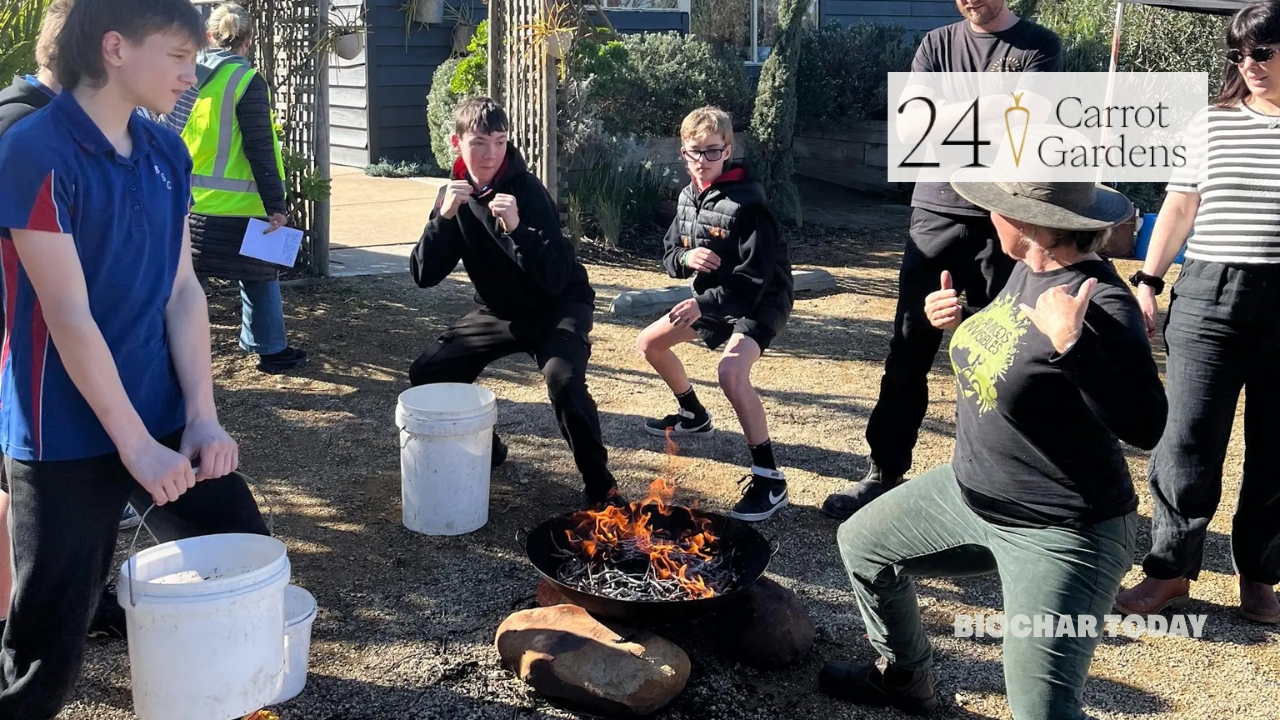
During National Science Week in Australia, 24 Carrot Gardens implemented an educational initiative introducing students to soil health practices, including biocharBiochar is a carbon-rich material created from biomass decomposition in low-oxygen conditions. It has important applications in environmental remediation, soil improvement, agriculture, carbon sequestration, energy storage, and sustainable materials, promoting efficiency and reducing waste in various contexts while addressing climate change challenges. More applications, through hands-on learning activities. The program engaged schools by integrating science-based environmental education into garden-based learning environments. Through structured workshops and demonstrations, students explored soil systems, carbon cycles, and sustainable land management practices. The initiative forms part of the organization’s broader effort to promote environmental literacy and practical agricultural knowledge among young learners while strengthening community awareness of sustainable resource use.
The primary challenge addressed by the initiative is the limited integration of soil health and carbon management concepts into early education. Although sustainable agriculture and climate-related practices are increasingly discussed in scientific and policy contexts, translating these concepts into accessible educational frameworks for students remains complex. Schools may lack the technical resources, curriculum support, or experiential learning tools necessary to teach soil-focused environmental science effectively. This gap can limit awareness of land management practices and reduce opportunities for early engagement with sustainability concepts relevant to agriculture and ecosystem management.
To address these challenges, 24 Carrot Gardens designed a curriculum-centered approach that combines classroom instruction with practical garden activities. During National Science Week, students participated in interactive sessions examining soil composition, organic matter management, and the role of biochar in improving soil systems. The program emphasized experiential learning by allowing students to observe soil processes directly and engage with scientific principles through hands-on experimentation. Educational materials and guided activities supported teachers in delivering structured lessons, while garden-based environments provided practical contexts for understanding environmental processes. This integrated approach aims to build foundational scientific knowledge while fostering awareness of sustainable agricultural practices.
The outcomes of the initiative include increased student engagement with soil science and improved understanding of sustainable land management concepts within participating schools. The program supports environmental education objectives by promoting awareness of carbon management practices and encouraging interest in agricultural sustainability. By embedding soil health learning into school programs, the initiative contributes to long-term knowledge development and community awareness. The model also demonstrates how educational institutions can incorporate practical environmental science into curricula, potentially strengthening future capacity for sustainable agriculture and resource management in Australia.


Leave a Reply