

Key Takeaways
- Applying a mix of biocharBiochar is a carbon-rich material created from biomass decomposition in low-oxygen conditions. It has important applications in environmental remediation, soil improvement, agriculture, carbon sequestration, energy storage, and sustainable materials, promoting efficiency and reducing waste in various contexts while addressing climate change challenges. More and banana-based compost is a highly effective, natural way to fix poor, acidic tropical soils.
- The highest dose tested significantly increased sweet corn yield by over 10% and biomassBiomass is a complex biological organic or non-organic solid product derived from living or recently living organism and available naturally. Various types of wastes such as animal manure, waste paper, sludge and many industrial wastes are also treated as biomass because like natural biomass these More by over 7% compared to chemical fertilizers alone.
- This natural amendment acts like a powerful “liming” agent, increasing soil pHpH is a measure of how acidic or alkaline a substance is. A pH of 7 is neutral, while lower pH values indicate acidity and higher values indicate alkalinity. Biochars are normally alkaline and can influence soil pH, often increasing it, which can be beneficial More by almost 1.8 units and drastically reducing toxic Aluminium by 96%.
- The combination of soil application (compost) and leaf spray (banana stem sap) boosts the plant’s ability to take up vital nutrients.
- This approach is a promising step toward reducing reliance on synthetic chemical fertilizers for sustainable farming in tropical acidic regions.
Tropical soils, common in regions like Malaysia, often pose a major challenge for farmers. These soils are frequently highly acidic, which leads to poor nutrient availability and high concentrations of toxic ions like Aluminum . This toxicity severely limits crop production, including that of sweet corn. In a recent study published in the Journal of Plant Nutrition, researchers Mahammad Shariful Islam, Mst. Fatima Khatun, Shyamal Brahma, Susilawati Kasim, and Md Khairul Alam tested an innovative, integrated strategy: combining a biochar-enriched compost (BEC) applied to the soil with a foliar application of banana stem sap (BSS) to the leaves. They hypothesized that this dual approach could simultaneously improve soil fertility and nutrient uptake, thereby boosting sweet corn yields.
The results of their pot experiments showed that the BEC had a transformative effect on the soil’s chemical properties. The highest rate of application, significantly improved soil quality compared to the control group, which received only the recommended chemical fertilizers. The soil pH—a measure of acidity—increased by a notable 1.79 units, moving the soil closer to a neutral pH ideal for crop growth. This increase in is critical because it directly reduces the bioavailability of toxic Al3+. In fact, this top BEC dose resulted in a 96%reduction in exchangeable Al3+and a 67% reduction in overall soil acidity. This remediation effect is primarily attributed to the alkaline nature of the banana-stem based compost and the liming effect of the biochar, which provides basic cations to neutralize the acid.
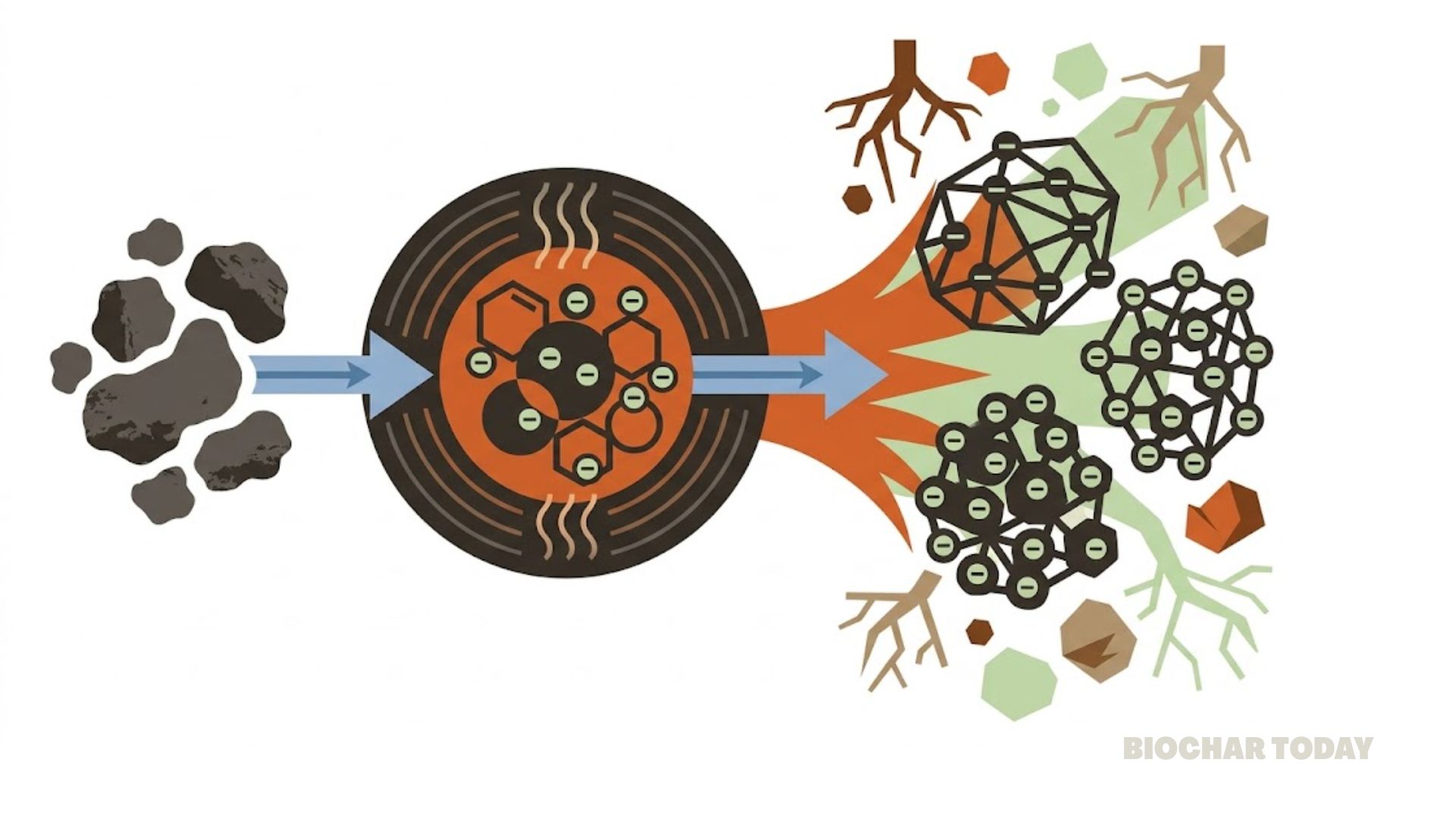
Beyond $\text{pH}$ adjustment, the BEC significantly enhanced soil fertility. The highest dose of BEC increased the soil’s Cation Exchange Capacity —the soil’s ability to hold onto vital nutrients—by 80% This was matched by substantial increases in key nutrients: exchangeable Potassium went up by 362%, Calcium by 230% , and Magnesium by 253%. Carbon, Nitrogen, and available Phosphorus also showed significant increases with the maximum BECdose. These changes create a far more welcoming environment for plant roots and nutrient absorption.
The soil improvements had a direct and positive impact on the sweet corn crop. The BEC treatment alone resulted in a increase in mean cob yield and an increase in dry biomass compared to the chemical fertilizer control. The foliar application of banana stem sap further enhanced performance, with the highest frequency of three sprays leading to an increase in mean cob yield and an increase in dry biomass over the no-spray treatment.
When the highest compost dose was combined with three foliar sprays, the uptake of K, Ca, and Mg by the sweet corn plants increased dramatically, demonstrating a significant synergistic effect. The enhanced nutrient uptake from the combination suggests that the improved soil conditions from BEC allow roots to function better, while the BSS provides an immediate, supplementary nutrient boost through the leaves. While the combination didn’t show a statistically significant interaction effect on the final yield, it clearly optimizes the plant’s nutritional status.
The study conclusively shows that the BEC application combined with the highest frequency , is a highly effective way to significantly boost sweet corn productivity and soil fertility in challenging acidic tropical soils. The findings strongly support this integrated, bio-based solution as a novel and promising path toward more sustainable agriculture. Future field trials will be essential to validate these benefits under real-world farming conditions and to assess the economic feasibility of using these inputs for farmers.
Source: Islam, M. S., Khatun, M. F., Brahma, S., Kasim, S., & Alam, M. K. (2025). Biochar-enriched compost and foliar application of banana stem sap on soil fertility, nutrient availability against $\text{Al}^{3+}$ toxicity, and sweet corn yield in acidic soil. Journal of Plant Nutrition.


Leave a Reply