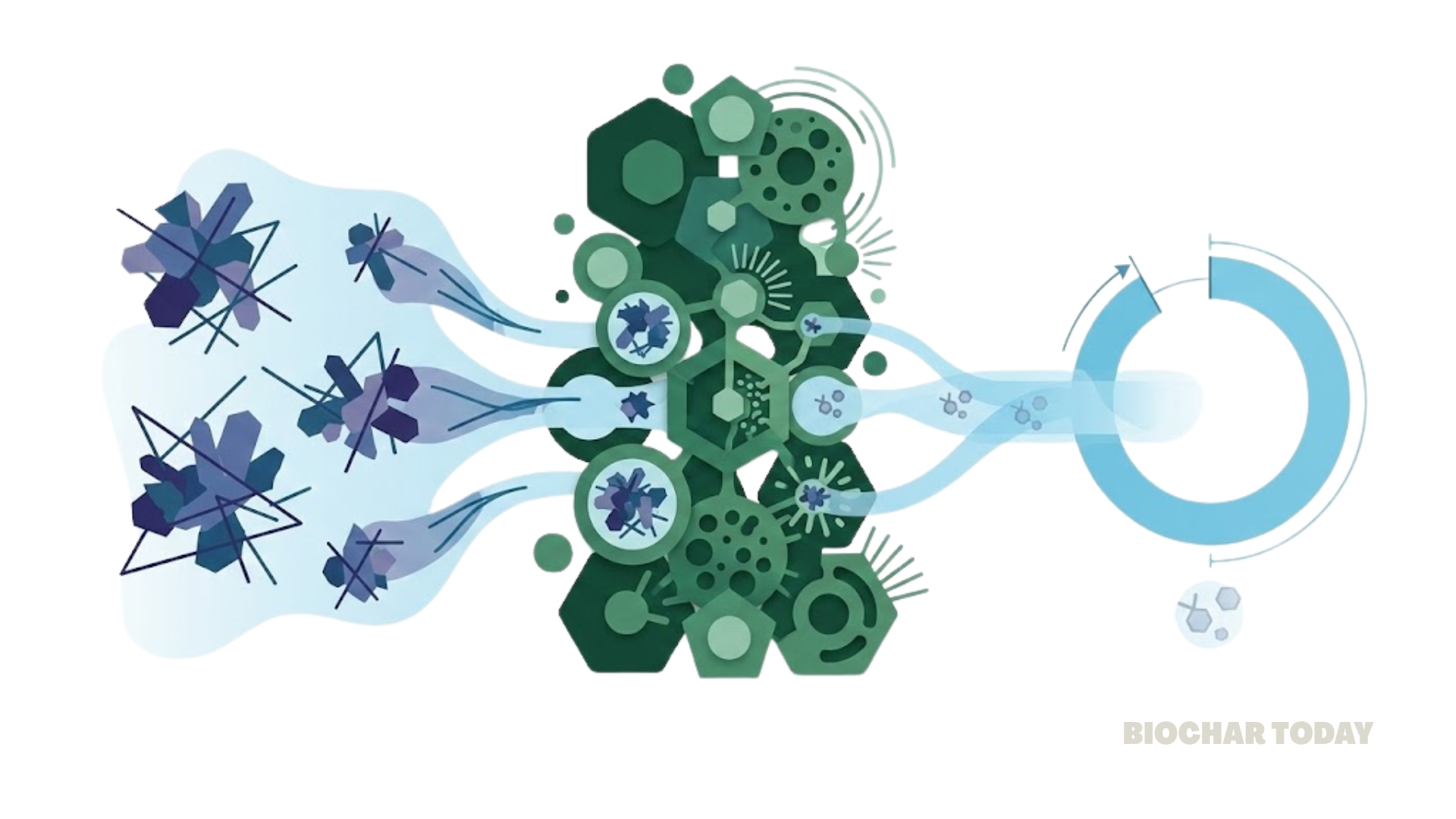
Biomass is a complex biological organic or non-organic solid product derived from living or recently living organism and available naturally. Various types of wastes such as animal manure, waste paper, sludge and many industrial wastes are also treated as biomass because like natural biomass these waste materials also are a mixture of organic and non-organic compounds and can be processed to get energy.

Why it matters:
- It is the source material: Biochar is produced through the thermal conversion of biomass via pyrolysis or gasification.
2. It is a valuable resource. Biomass, which is typically considered worthless and costly to dispose of, becomes a valuable resource when used for biochar production. This helps avoid issues like tipping fees, overflowing landfills, open burning, and pollution.
3. It allows for sustainable production. Sustainable biochar production uses specific types of biomass, such as crop residues, non-commercial wood, wood waste, and manure. It emphasizes using excess biomass that would not otherwise be used for food or maintaining forest and agricultural health.
4. It creates additional valuable products. During pyrolysis, biomass is converted not only into biochar but also into other valuable bioenergy and bioproducts, such as liquid fuels (bio-oil), industrial chemicals, and syngas. These byproducts can be sold or used on-site for energy production.
5. It contributes to clean energy and sequestration. The conversion of biomass to biochar and other products through pyrolysis is a clean energy process. The resulting biochar is carbon-enriched, and its production process captures emissions that are typically associated with burning biomass. This has a potential role in carbon sequestration, which could be a factor in cap-and-trade and offset markets in the future.
Referneces
Mishra, R. K., Kumar, D. J. P., Narula, A., Chistie, S. M., & Naik, S. U. (2023). Production and beneficial impact of biochar for environmental application: A review on types of feedstocks, chemical compositions, operating parameters, techno-economic study, and life cycle assessment. Fuel, 343, 127968.https://doi.org/10.1016/j.fuel.2023.127968
Amalina, F., Abd Razak, A. S., Krishnan, S., Sulaiman, H., Zularisam, A. W., & Nasrullah, M. (2022). Biochar production techniques utilizing biomass waste-derived materials and environmental applications–A review. Journal of Hazardous Materials Advances, 7, 100134.https://doi.org/10.1016/j.hazadv.2022.100134