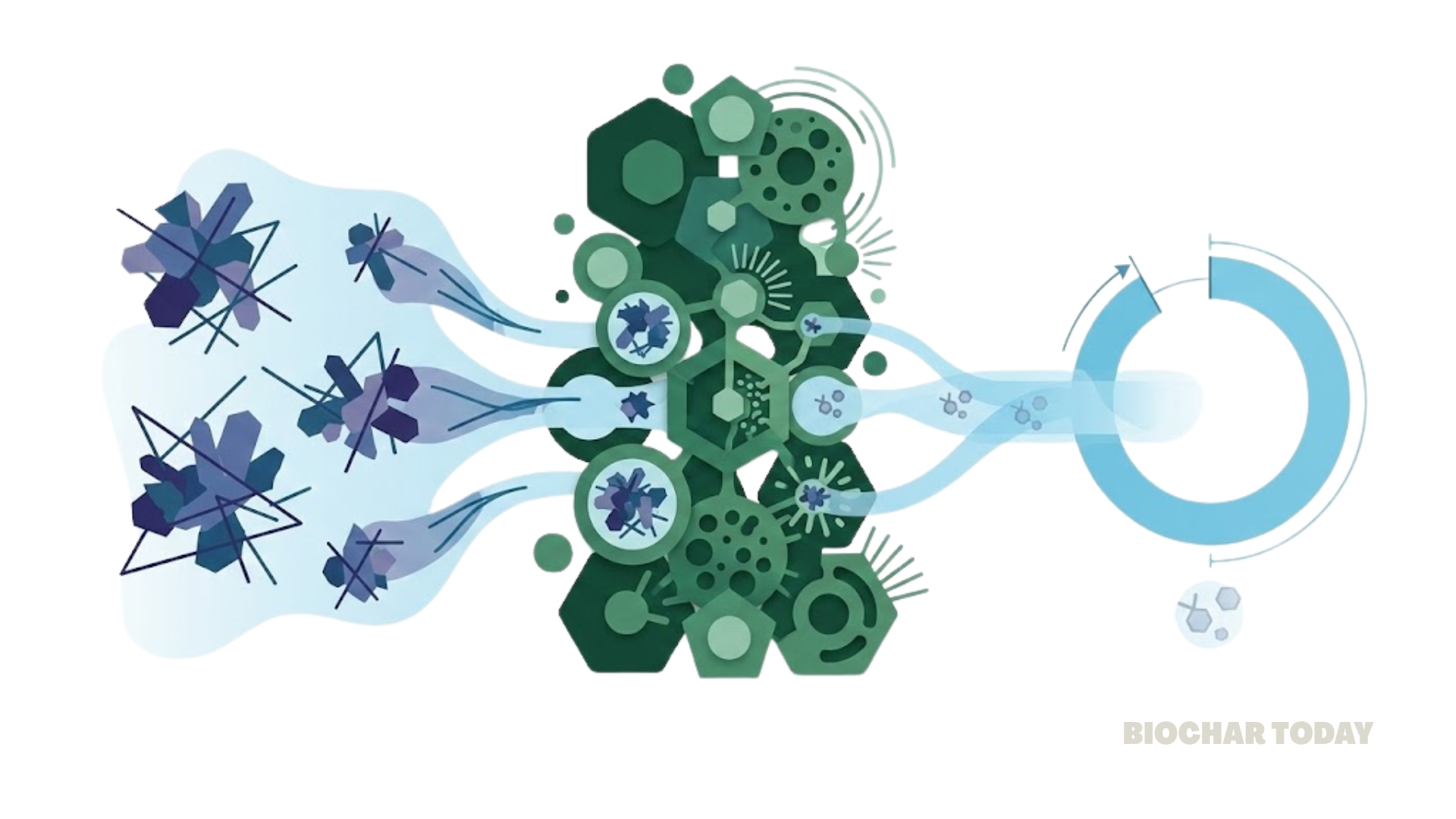
Biochar is a porous, carbonaceous solid material with a high degree of aromatization and a notable resistance to decomposition, created through the thermal decomposition of biomass in a limited-oxygen or oxygen-free environment, with its physicochemical properties varying based on the feedstock and pyrolysis conditions.

Why it matters
Biochar is a material of significant scientific and academic interest due to its diverse applications in environmental and agricultural contexts, contributing to waste management and climate change mitigation. The various applications of biochar in the areas are as follow:
- Environmental Remediation: Its porous structure and large surface area enable it to act as an effective adsorbent, removing organic and inorganic pollutants like heavy metals and dyes from soil and water.
2. Soil Improvement: Biochar enhances soil quality and fertility by improving water retention, increasing pore volume, and providing a habitat for beneficial microorganisms. This also helps regulate soil pH and reduce nutrient loss.
3. Increased Agricultural Yield: By improving soil health and nutrient retention, biochar application has been shown to increase crop yields, particularly in degraded or low-fertility soils.
4. Carbon Sequestration: Its high stability and resistance to decomposition make it a valuable tool for long-term carbon sequestration in soil, which is a critical strategy for mitigating climate change.
5. Energy Storage: It serves as a low-cost, porous, and high-surface-area electrode material for supercapacitors and other energy storage systems.
6. Novel Materials Precursor: Biochar can be used as a precursor for developing advanced materials like carbon dots and graphene, which have applications in various scientific and technological fields.
7. Sustainable Construction Material: Biochar is being explored for use in sustainable building materials, such as biochar-blended cement and bricks, to improve their properties and reduce the environmental impact of construction.
8. Animal Feed: When added to animal feed, biochar can improve digestive health, enhance immunity, increase growth rates, and reduce methane emissions.
9. Bedding Material: Biochar can be used as a bedding material for livestock to improve hygiene and reduce odors while enriching the resulting manure for use as a soil amendment.
10. Circular Bioeconomy: By converting agricultural and other waste biomass into a valuable product, biochar production promotes resource efficiency and waste valorization, supporting a circular bioeconomy model.
Recommended Reading
Amalina, F., Abd Razak, A. S., Krishnan, S., Sulaiman, H., Zularisam, A. W., & Nasrullah, M. (2022). Biochar production techniques utilizing biomass waste-derived materials and environmental applications–A review. Journal of Hazardous Materials Advances, 7, 100134. https://doi.org/10.1016/j.hazadv.2022.100134
Yaashikaa, P. R., Kumar, P. S., Varjani, S., & Saravanan, A. J. B. R. (2020). A critical review on the biochar production techniques, characterization, stability and applications for circular bioeconomy. Biotechnology reports, 28, e00570. https://doi.org/10.1016/j.hazadv.2022.100134
Feliz Florian, G., Ragoubi, M., Leblanc, N., Taouk, B., & Abdelouahed, L. (2024). Biochar production and its potential application for biocomposite materials: A comprehensive review. Journal of Composites Science, 8(6), 220. https://doi.org/10.3390/jcs8060220
Li, S., & Tasnady, D. (2023). Biochar for soil carbon sequestration: Current knowledge, mechanisms, and future perspectives. C, 9(3), 67. https://doi.org/10.3390/c9030067
Prabakar, P., Mustafa Mert, K., Muruganandam, L., & Sivagami, K. (2024). A comprehensive review on biochar for electrochemical energy storage applications: an emerging sustainable technology. Frontiers in Energy Research, 12, 1448520. https://doi.org/10.3389/fenrg.2024.1448520
Plenča, K., Cvetnić, S., Prskalo, H., Kovačić, M., Cvetnić, M., Kušić, H., … & Lončarić Božić, A. (2023). Biomass pyrolysis-derived biochar: a versatile precursor for graphene synthesis. Materials, 16(24), 7658. https://doi.org/10.3390/ma16247658
Tomczyk, A., Sokołowska, Z., & Boguta, P. (2020). Biochar physicochemical properties: pyrolysis temperature and feedstock kind effects. Reviews in Environmental Science and Bio/Technology, 19(1), 191-215. https://doi.org/10.1007/s11157-020-09523-3
Barbhuiya, S., Das, B. B., & Kanavaris, F. (2024). Biochar-concrete: A comprehensive review of properties, production and sustainability. Case Studies in Construction Materials, 20, e02859. https://doi.org/10.1016/j.cscm.2024.e02859
Ayeneshet, B., & Temesgen, T. (2025). Role of Biochar as a Feed Additive on Animal Performance, Digestibility, Micro‐Biota Dynamics, and Reduction of Enteric Methane Production. Advances in Agriculture, 2025(1), 9911760. https://doi.org/10.1155/aia/9911760