
The biocharBiochar is a carbon-rich material created from biomass decomposition in low-oxygen conditions. It has important applications in environmental remediation, soil improvement, agriculture, carbon sequestration, energy storage, and sustainable materials, promoting efficiency and reducing waste in various contexts while addressing climate change challenges. More industry has long been a subject of fascination for agricultural and environmental analysts. When produced and applied correctly, its potential to sequester carbon while improving soil health and crop yields is undeniable, yet its widespread adoption has been hampered by a series of logistical and economic hurdles.
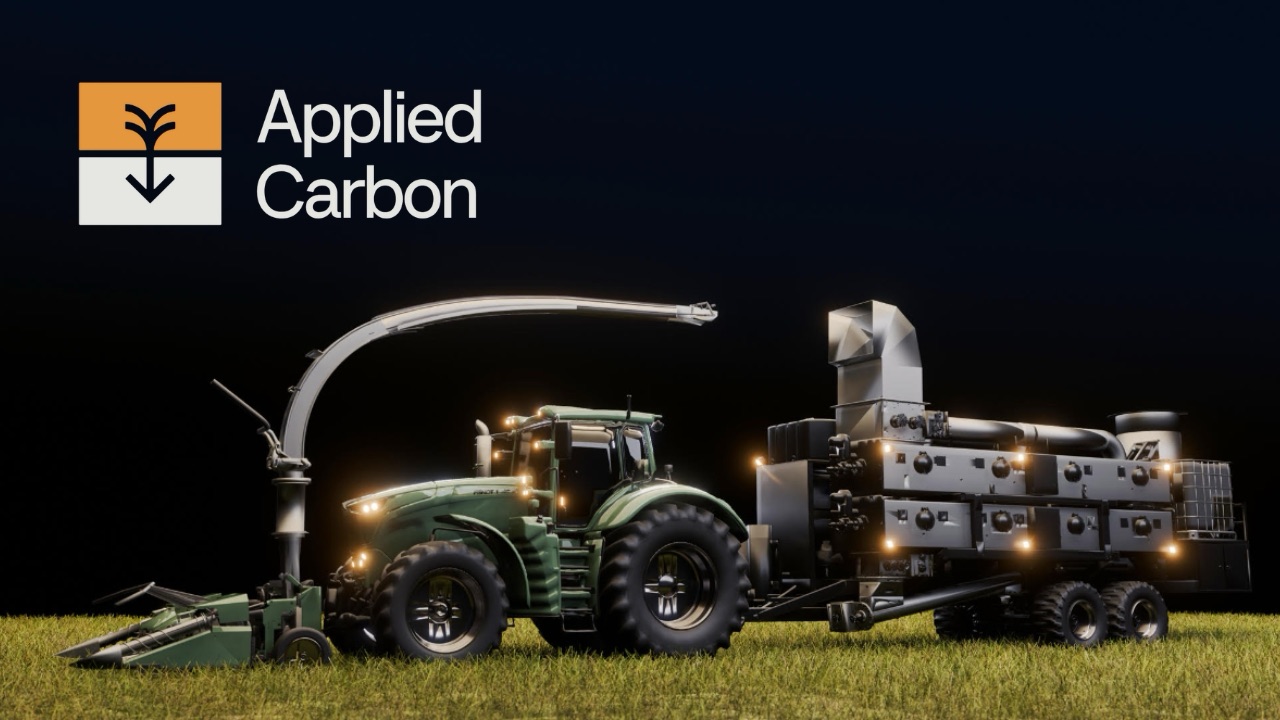
Applied Carbon, a company co-founded by biochar veteran Jason Aramburu, is challenging the status quo with an innovative, distributed approach that could fundamentally reshape the industry. By focusing on a mobile, “in-field” model, they are tackling the very issues that have plagued biochar for years: production costs, feedstockFeedstock refers to the raw organic material used to produce biochar. This can include a wide range of materials, such as wood chips, agricultural residues, and animal manure. More sourcing, and a fragmented supply chain.
The Genesis of a Disruptor
Aramburu’s journey began over 15 years ago, working with small-scale farmers in East Africa, where he saw firsthand the transformative power of biochar. Despite the positive impact, he recognized a fundamental flaw: the low-tech, burn-barrel production model was not financially viable. This experience, combined with a later realization that “the only people getting rich in biochar were the trucking companies,” led him and co-founder Morgan Williams to a critical insight. The industry’s reliance on centralized production and long-distance transport was unsustainable. The solution, they concluded, was to make biochar “locally with the materials that are actually available on the farm.”
This epiphany sparked a five-year R&D effort. Applied Carbon’s initial search for off-the-shelf pyrolysisPyrolysis is a thermochemical process that converts waste biomass into bio-char, bio-oil, and pyro-gas. It offers significant advantages in waste valorization, turning low-value materials into economically valuable resources. Its versatility allows for tailored products based on operational conditions, presenting itself as a cost-effective and efficient More systems proved fruitless. As Aramburu explains, while existing systems work well with wood chips, they fail with the diverse agricultural residues and low-value wood products that are abundant on farms. The team realized they needed to engineer a completely new system. They spent years bootstrapping the company with friends, family, and grants, meticulously prototyping and refining their technology through four different iterations before launching their first commercial-scale mobile units.
A Technological Leap: The Mobile Pyrolyzer
Applied Carbon’s core innovation lies in its unique pyrolysis reactor. Traditional pyrolysis systems are either direct-fired (like a burn barrel) or indirect-fired. Indirect-fired reactors produce a higher-quality char but are mechanically complex and prohibitively expensive to scale. Applied Carbon’s system is an auger-based reactor that combines the best of both approaches. This design allows them to reach the high temperatures of an indirect-fired system, ensuring a high-quality product, but with a much simpler, more scalable architecture.
Beyond the reactor, the mobile units are a technological marvel. Each unit is heavily instrumented with sensors and a mobile internet connection. This isn’t just a machine; it’s a smart system that logs and transmits data in real-time to the cloud. This data is then used to calculate the net carbon removal of every ton of biochar produced, a process that is fully audited and compliant with carbon registries. This level of data integration simplifies the carbon credit registration process, a critical value-add for farmers who lack the resources to manage complex data and regulatory requirements.
Another key feature is the integrated quenching system. A major risk with in-field mobile pyrolysis is fire from hot biochar. Applied Carbon’s units are fully insulated and have spark arrestors, but the quenching system is the real game-changer. It cools the char to ambient temperature using water. In a brilliant move, the company also offers the option to blend the quenching water with conditioning agents like humic acid or organic fertilizers. This not only mitigates fire risk but also pre-charges the biochar, making it immediately more effective when applied to the soil.
Addressing the Adoption Hurdle
The biggest challenge in the biochar industry isn’t just production; it’s adoption. Farmers are notoriously risk-averse, and the status quo of burning or discarding agricultural waste is deeply ingrained. Applied Carbon addresses this by making the process as seamless as possible. Their model of “Biochar as a Service” removes the burden from the farmer. The company deploys its mobile units to a farm, processes the waste, and either sells the resulting biochar back to the farmer or spreads it in their fields, often before tillage. The farmer doesn’t have to worry about operating the equipment, maintenance, or marketing the carbon credits.
While the future vision is to sell or lease the equipment to farmers and biomassBiomass is a complex biological organic or non-organic solid product derived from living or recently living organism and available naturally. Various types of wastes such as animal manure, waste paper, sludge and many industrial wastes are also treated as biomass because like natural biomass these More processors, the current service model serves a dual purpose: it’s a commercially viable business while also acting as a real-world R&D lab. As Aramburu notes, “the first units, you know, there’s always bugs, kinks to work out.” This approach allows the company to iron out all the operational issues with their own team before scaling up and handing off the equipment to third-party operators.
The Business of Carbon
Applied Carbon’s business model is a textbook example of a multi-revenue stream approach. The company generates revenue from both the biochar product and the carbon credits it produces. While the agricultural market for biochar is still evolving, the demand for high-quality carbon removal credits is soaring. Applied Carbon has leveraged this demand to attract investment, securing a seed round and a Series A from strategic partners who are not only buying their credits but also investing in the technology. This creates a powerful feedback loop: investors provide the capital needed to scale, and in return, they secure a reliable supply of verified carbon credits.
The company’s success is a testament to its focus on solving a core problem. For the farmer, Applied Carbon addresses the issue of depleting soil carbon stocks and the associated loss of nutrients and water retention. It also solves a waste management problem by turning low-value agricultural residues—like nutshells from pecan or almond farms—into a valuable, soil-enhancing product. For the planet, the company offers a scalable, verifiable solution to the urgent problem of atmospheric carbon removal.
Key Takeaways and Lessons Learned
- Problem-First Approach. The most successful technologies solve a real-world problem. Applied Carbon’s decision to focus on the logistical and economic barriers of distributed biochar production, rather than just building a better mousetrap, has been their key to success. They addressed both the waste management and soil health issues for farmers, creating a compelling value proposition.
- Vertical Integration as a Strategic Advantage. By operating their own units and offering “Biochar as a Service,” Applied Carbon was able to bootstrap, learn, and refine their technology in a live environment. This allowed them to work out the inevitable kinks in their physical hardware before attempting to scale and hand off the technology to third parties.
- Build the Market, Don’t Blame It. As Aramburu wisely points out, the “if you build it, they will come” mentality is a trap. The biochar industry requires significant market-building, education, and strategic partnerships. Applied Carbon’s focus on simplifying the process for farmers and leveraging the carbon credit market demonstrates a sophisticated understanding of this challenge.
- The Power of Partnerships. The company’s strategic decision to partner with carbon credit buyers who are also investors created a powerful, self-reinforcing model. This alignment of interests provides the capital needed for growth while guaranteeing a market for their primary product: carbon removal.


Leave a Reply