
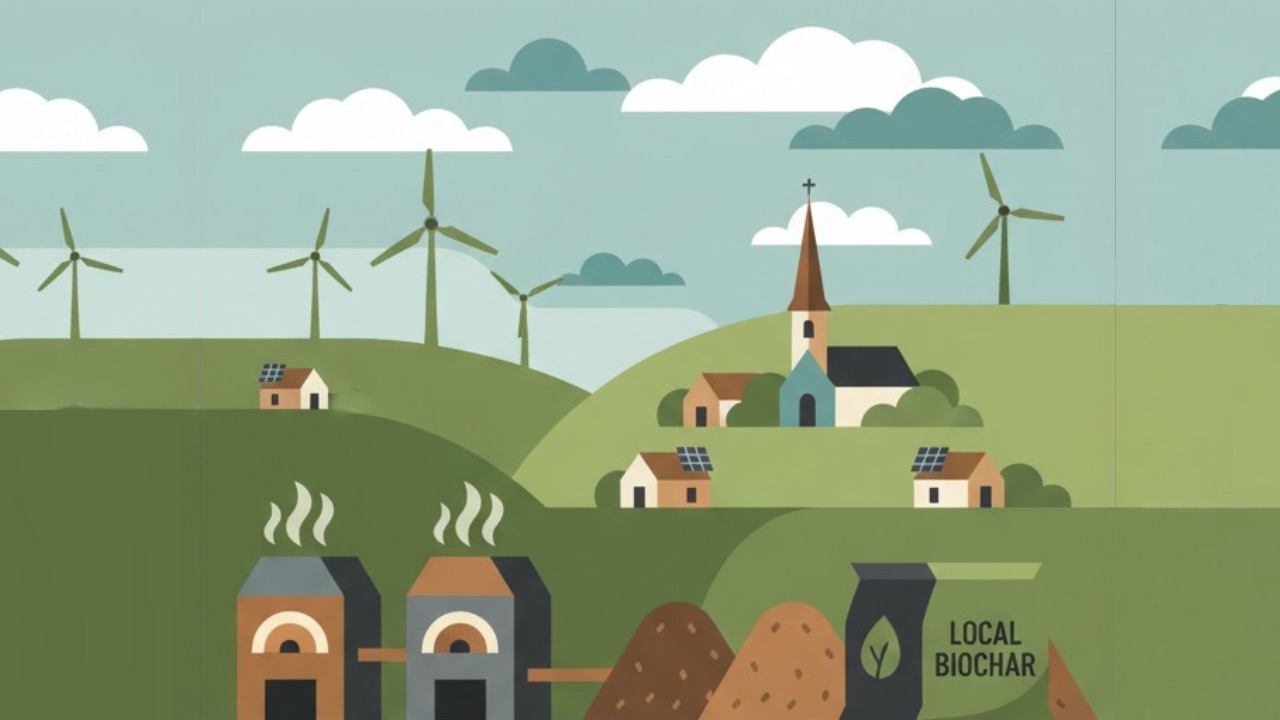
In this instalment of my “Nations of Biochar” series, I turn the spotlight onto the United Kingdom. While nations like Nepal (covered last week) call for small, community-driven biocharBiochar is a carbon-rich material created from biomass decomposition in low-oxygen conditions. It has important applications in environmental remediation, soil improvement, agriculture, carbon sequestration, energy storage, and sustainable materials, promoting efficiency and reducing waste in various contexts while addressing climate change challenges. More solutions, my research reveals that the UK’s existing infrastructure and pressing national challenges demand a more centralised and scaled-up approach to unlock biochar’s enormous potential.
The UK is poised with the expertise, engineering know-how, and a dire need to embed biochar into its climate action. However, systemic hurdles – chiefly regulatory and economic – are holding the industry back.
The Biomass Paradox: Undervalued Wood and Missed Opportunity
The first step in a successful UK biochar economy lies in solving our BiomassBiomass is a complex biological organic or non-organic solid product derived from living or recently living organism and available naturally. Various types of wastes such as animal manure, waste paper, sludge and many industrial wastes are also treated as biomass because like natural biomass these More Paradox.
The UK relies on overseas supply for over 80% of its timber consumption. This massive dependence shifts carbon and biodiversity impacts abroad, while simultaneously deprioritizing the domestic forestry sector. The result? Our woodlands are struggling with under-management and disease like AshAsh is the non-combustible inorganic residue that remains after organic matter, like wood or biomass, is completely burned. It consists mainly of minerals and is different from biochar, which is produced through incomplete combustion. Ash Ash is the residue that remains after the complete More Dieback, creating a glut of non-marketable woody biomass that often goes to waste or is only used in low-value heat applications.
This is where biochar production becomes a crucial lever for forest health. By carbonizing this forest residue and sawmill waste, we transform an economic burden into a valuable carbon-sequestering product with the process heat providing a renewable energy and electricity source. This provides a high-value incentive for woodland owners to engage in the necessary active, healthy forest management our forests desperately need.
The Environmental Imperative: Healing UK Soil and Water
The resulting biochar is the perfect tool to address what I believe are two of the most critical environmental crises facing the UK: soil degradation and water pollution.
Farming the Carbon Back In
For farmers, biochar is a triple win:
- Soil Improvement: Its porous structure enhances the soil’s ability to hold water and nutrients, meaning farmers can rely on less expensive synthetic fertiliser.
- Carbon Credits: Applied at scale, it provides access to voluntary carbon markets, offering a vital new revenue stream to offset the initial purchase cost.
- Sustainable Transition: It’s an ideal partner for the transition to regenerative farming principles, aligning with new government support schemes.
Filtering the Runoff
The UK’s waterways are under severe threat from diffuse agricultural pollution, predominantly from farm runoff carrying excess nitrates and phosphates. Currently, over 60% of river stretches fail ecological health standards due to poor agricultural practices.
Biochar acts as a highly effective adsorbent. It can be engineered into permeable reactive barriers or low-cost filters in drainage systems to capture and immobilise excess nutrients before they reach the river system, preventing devastating algal blooms. In essence, it allows farmers to valorise their nutrient inputs that would otherwise be pollutants, creating a charged, inoculated biochar from the captured nutrients.
Navigating the Obstacles: Policy is the Problem
Despite the clear benefits, the path to scaling biochar in the UK is blocked by bureaucratic and economic barriers:
- High Cost Barrier: At up to £1000 per tonne, the current price of biochar is too high for farmers operating on tight margins. Access to carbon market revenue must be streamlined to lower the effective price.
- Restrictive Regulation: The Environment Agency’s Low Risk Waste Position (LRWP 61), while a start, imposes highly restrictive limits on storage and application (e.g., only 1 tonne per hectare per year), which stifles large-scale adoption.
- The ‘Waste’ Classification Dilemma: The most significant problem is the legal classification of biochar as ‘waste’ if made from discarded feedstocks or if the production’s primary goal is the co-products (like heat). This triggers costly waste management regulations, discouraging investment. Additionally, viewing carbonization as a form of recycling would assist with council-level incentivization, as currently using biomass waste this way would deduct from recycling numbers.
Scaling the Solution: The Regional Hub Model
Given the need for consistent quality, optimal co-product utilisation (heat/pyrolysis oils), and to achieve the economies of scale required for affordability, the UK must pursue a model of large, regional pyrolysisPyrolysis is a thermochemical process that converts waste biomass into bio-char, bio-oil, and pyro-gas. It offers significant advantages in waste valorization, turning low-value materials into economically valuable resources. Its versatility allows for tailored products based on operational conditions, presenting itself as a cost-effective and efficient More hubs.
Unlike in a nation like Nepal, the UK’s strong national road infrastructure makes the centralised transport and processing of biomass logistically and economically feasible. Large facilities would allow us to:
- Lower Production Costs: Achieving economies of scale to make biochar truly affordable for the agricultural sector.
- Optimise Co-benefits: Efficiently capturing and using all the heat and pyrolysis oils, improving the financial viability of the plants.
- Ensure Consistent Quality: Centralised control ensures the biochar meets the stringent, certified standards required for premium markets.
The initiative being pioneered by Shropshire Council to convert local biomass (including Ash Dieback arisings) into biochar and renewable energy is a leading example of how regional authorities can lead the way.
The technology is proven, the feedstockFeedstock refers to the raw organic material used to produce biochar. This can include a wide range of materials, such as wood chips, agricultural residues, and animal manure. More is available, and the need is urgent. The next step is not about proving biochar, it’s about fixing the policy and securing the investment needed to deploy it at a scale that finally allows the UK to re-evaluate and invest in its woodlands for the benefit of our climate, soil, and water.
For a full, detailed breakdown of the UK’s biochar potential, including specific policy recommendations, statistics, and in-depth analysis of the economic models, please check out the full article in our subscriber section.




Leave a Reply