

Water pollution is a significant global concern, with a large volume of wastewater containing chemicals that pose environmental risks. The development of sustainable and low-cost wastewater treatment methods has therefore become a focus for researchers. BiocharBiochar is a carbon-rich material created from biomass decomposition in low-oxygen conditions. It has important applications in environmental remediation, soil improvement, agriculture, carbon sequestration, energy storage, and sustainable materials, promoting efficiency and reducing waste in various contexts while addressing climate change challenges. More is being explored as a promising and cost-effective adsorbent for treating pollutants in wastewater and let’s have a look at the scope and potential as a green adsorbent for its use in pollutant removal.
Biochar Sources and Characteristics
Understanding biochar begins with an examination of its fundamental nature and origins. Biochar is a carbon-rich solid material produced from the thermal decomposition of biomassBiomass is a complex biological organic or non-organic solid product derived from living or recently living organism and available naturally. Various types of wastes such as animal manure, waste paper, sludge and many industrial wastes are also treated as biomass because like natural biomass these More in a low-oxygen environment. Its physical, chemical, and structural properties are highly influenced by the origin of the biomass and the conditions under which it is prepared. This versatile material can be produced from a wide variety of biomass feedstocks, including agricultural byproducts like rice husk and sugarcane bagasse, materials from forestry residues such as wood chips, sawdust, and tree bark, aquatic residues like algae, seaweed, and periwinkle shells , and industrial residues from sources such as paper, textiles, and sludge. The specific properties that make biochar an effective adsorbent include a high surface area, a porous structure, and various surface functional groups such as hydroxyl and carboxyl groups. These properties allow it to efficiently remove a wide range of organic and inorganic pollutants from wastewater.

Production and Modification of Biochar
The final properties of biochar are not accidental; they are carefully controlled during its production. The characteristics of biochar are dependent on factors such as feedstock composition and the specific production process used. For instance, a main method of production is pyrolysisPyrolysis is a thermochemical process that converts waste biomass into bio-char, bio-oil, and pyro-gas. It offers significant advantages in waste valorization, turning low-value materials into economically valuable resources. Its versatility allows for tailored products based on operational conditions, presenting itself as a cost-effective and efficient More, but other methods such as hydrothermal carbonization (HTC) and gasificationGasification is a high-temperature, thermochemical process that converts carbon-based materials into a gaseous fuel called syngas and solid by-products. It takes place in an oxygen-deficient environment at temperatures typically above 750°C. Unlike combustion, which fully burns material to produce heat and carbon dioxide (CO2), gasification More also exist.
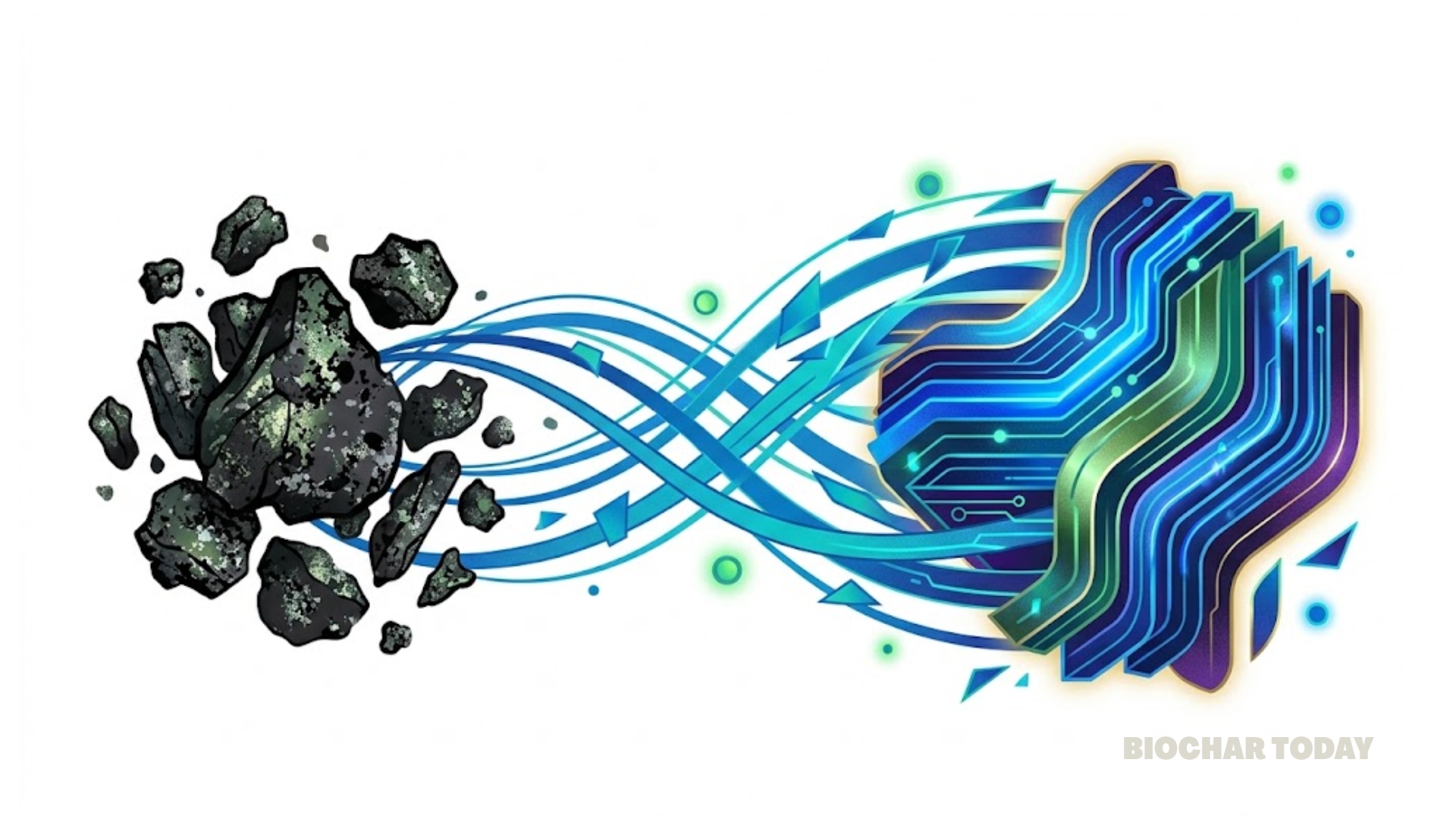
While native biochar has limitations, its adsorption performance can be enhanced. To improve biochar properties, various modification techniques are employed, which can be categorized as follows:
- Chemical Methods: These include acid-alkaline activation, metal doping, and heteroatom impregnation. Acid treatment can increase the surface charge and introduce additional functional groups. Alkaline activation can enlarge pores and increase surface area. Metal doping and impregnation can enhance removal rates and impart magnetic properties for easy separation.
- Physical Methods: These include ball milling, which grinds biochar into fine particles to increase surface area and porosityPorosity of biochar is a key factor in its effectiveness as a soil amendment and its ability to retain water and nutrients. Biochar’s porosity is influenced by feedstock type and pyrolysis temperature, and it plays a crucial role in microbial activity and overall soil health. Biochar More. Gas or steam activation is another technique used to increase surface reactivity and porosity.

The purpose of these modifications is to improve properties like specific surface area, pore size distribution, and the number of functional groups.
Adsorption Mechanisms for Pollutant Removal
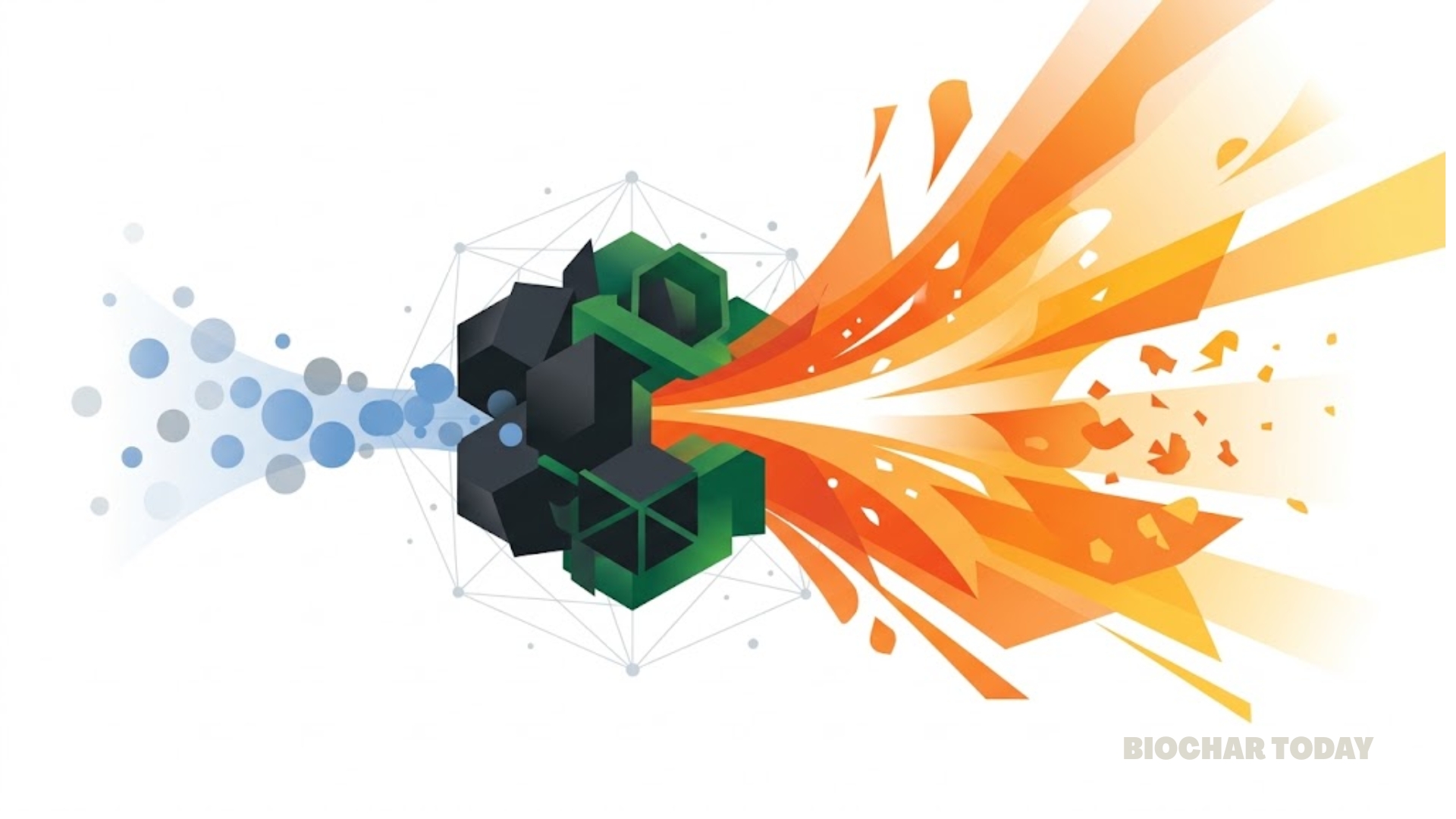
B iochar’s ability to remove pollutants is facilitated by its unique properties, which enable several different mechanisms of action. The removal of organic and inorganic pollutants involves various interactions between the biochar and the pollutant. These mechanisms include:
- Pore Filling: This is a physical process where pollutants are condensed and trapped within the biochar’s porous structure. The micropores, mesopores, and macropores of biochar all play a role, with macropores facilitating substance diffusion, mesopores serving as mass transfer channels, and micropores providing trapping space. This mechanism is also dependent on the polarity of the contaminant and is favored when the biochar has a low volatile content.
- Electrostatic Interaction: This is a crucial mechanism for both organic and inorganic compounds, driven by attraction and repulsion of charges. Electrostatic interactions occur between charged functional groups on the biochar surface and charged sites on pollutant molecules. The pHpH is a measure of how acidic or alkaline a substance is. A pH of 7 is neutral, while lower pH values indicate acidity and higher values indicate alkalinity. Biochars are normally alkaline and can influence soil pH, often increasing it, which can be beneficial More of the medium is a key factor affecting this interaction, as it influences the surface charge of the biochar and the extent of dissociation of the pollutant’s functional groups. For instance, at low pH, biochar can have a positive surface charge, promoting the adsorption of negatively charged pollutants. At high pH, biochar can have a negative charge, favoring the adsorption of cationic pollutants.
- Hydrophobic Interaction: This mechanism is used for the adsorption of non-polar or neutral organic compounds. The hydrophobic nature of biochar is a result of carbonization, which leads to an increase in carbon content and a decrease in oxygen, hydrogen, nitrogen, and sulfur content. Higher pyrolysis temperatures can enhance the hydrophobic nature of biochar by reducing the number of polar groups on its surface.
- Complexation: This mechanism involves the formation of complex chelate compounds through the interaction of transition metals with ligands. Functional groups on the biochar surface, particularly those containing oxygen, can interact with the orbitals of transition metals to form complexes. Biochar produced at lower temperatures has a high affinity for complexation , and this phenomenon is more common in biochar derived from plants compared to animals.
- Precipitation: This occurs when pollutants form precipitates, either in the solution or on the adsorbent surface. It is a prevalent mechanism for the adsorptive removal of heavy metals. Biochar that is alkaline enhances this mechanism due to the presence of electronegative active sites that are favorable for cation adsorption. The formation of mineral precipitates, such as carbonates and phosphates from the feedstock, can provide additional active sorption sites.
- Ion Exchange: This mechanism involves the exchange of ions between the biochar (solid phase) and the wastewater (liquid phase) to maintain electrical neutrality. The efficiency of this process is influenced by the size of the pollutant and the type of surface functionalization on the biochar. The exchange of protons and ionized cations with dissolved salts on the biochar’s surface is a key principle of this mechanism.

Future Outlook and Challenges
While biochar has shown promising results in numerous studies, its widespread industrial implementation faces several challenges. Its large-scale application requires optimization of various parameters.
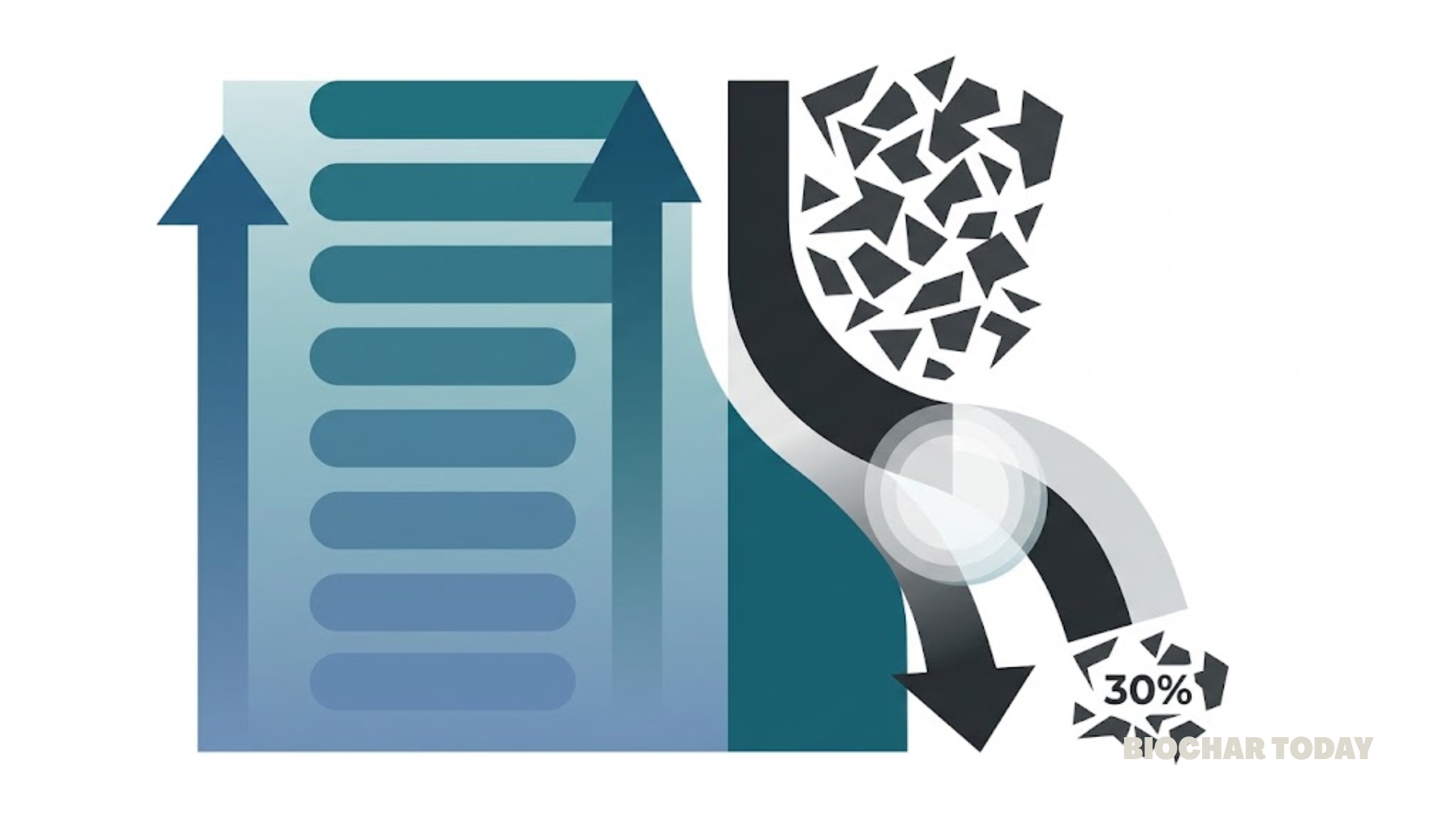
Despite its promise, several issues need to be addressed in future research. Many studies have been conducted in laboratory settings and focus on the removal of a single pollutant. However, more research is needed to understand how biochar performs in complex wastewater containing a mixture of co-contaminants. Real-world and industrial wastewater typically contains a variety of pollutants, making the adsorption mechanism more complex. Studies on competitive adsorption for various organic pollutants within actual wastewater systems are an important area for future research. For biochar to be a sustainable and economically viable solution, it needs to be easily reusable. Regeneration is essentially the reverse of the adsorption process, but regeneration methods can be costly and may also produce secondary pollutants. Research is needed to develop efficient, low-cost regeneration techniques and to manage waste biochar appropriately. Thermal regeneration is considered a mature process with low cost, but it can result in carbon loss. The cost and method of regeneration are pivotal in ensuring the stability and reusability of biochar for practical applications. While biochar can be produced from readily available biomass, its production on an industrial scale still requires optimization to minimize costs and ensure efficiency. The development of long-term field investigations is needed to confirm biochar’s potential as an environmentally friendly adsorbent on a commercial scale.
In conclusion, biochar provides a sustainable and low-cost approach to wastewater treatment. Its effectiveness is based on its versatile properties and various adsorption mechanisms. Addressing current challenges and pursuing further research into scalability and long-term performance are key steps toward integrating biochar into mainstream environmental management practices
References
Murtaza, Ghulam, Zeeshan Ahmed, Dong-Qin Dai, Rashid Iqbal, Sami Bawazeer, Muhammad Usman, Muhammad Rizwan et al. “A review of mechanism and adsorption capacities of biochar-based engineered composites for removing aquatic pollutants from contaminated water.” Frontiers in Environmental Science 10 (2022): 1035865.https://doi.org/10.3389/fenvs.2022.1035865
Ambaye, Teklit Gebregiorgis, Mentore Vaccari, Eric D. van Hullebusch, Abdeltif Amrane, and S. J. I. J. O. E. S. Rtimi. “Mechanisms and adsorption capacities of biochar for the removal of organic and inorganic pollutants from industrial wastewater.” International Journal of Environmental Science and Technology 18, no. 10 (2021): 3273-3294.
https://doi.org/10.1007/s13762-020-03060-w
Hama Aziz, Kosar Hikmat, Nazhad Majeed Fatah, and Khalid Taib Muhammad. “Advancements in application of modified biochar as a green and low-cost adsorbent for wastewater remediation from organic dyes.” Royal Society Open Science 11, no. 5 (2024): 232033.https://doi.org/10.1098/rsos.232033
Jha, Stuti, Rama Gaur, Syed Shahabuddin, and Inderjeet Tyagi. “Biochar as sustainable alternative and green adsorbent for the remediation of noxious pollutants: a comprehensive review.” Toxics 11, no. 2 (2023): 117.https://doi.org/10.3390/toxics11020117
Díaz, Bryan, Alicia Sommer-Márquez, Paola E. Ordoñez, Ernesto Bastardo-González, Marvin Ricaurte, and Carlos Navas-Cárdenas. “Synthesis methods, properties, and modifications of biochar-based materials for wastewater treatment: a review.” Resources 13, no. 1 (2024): 8.https://doi.org/10.3390/resources13010008


Leave a Reply