
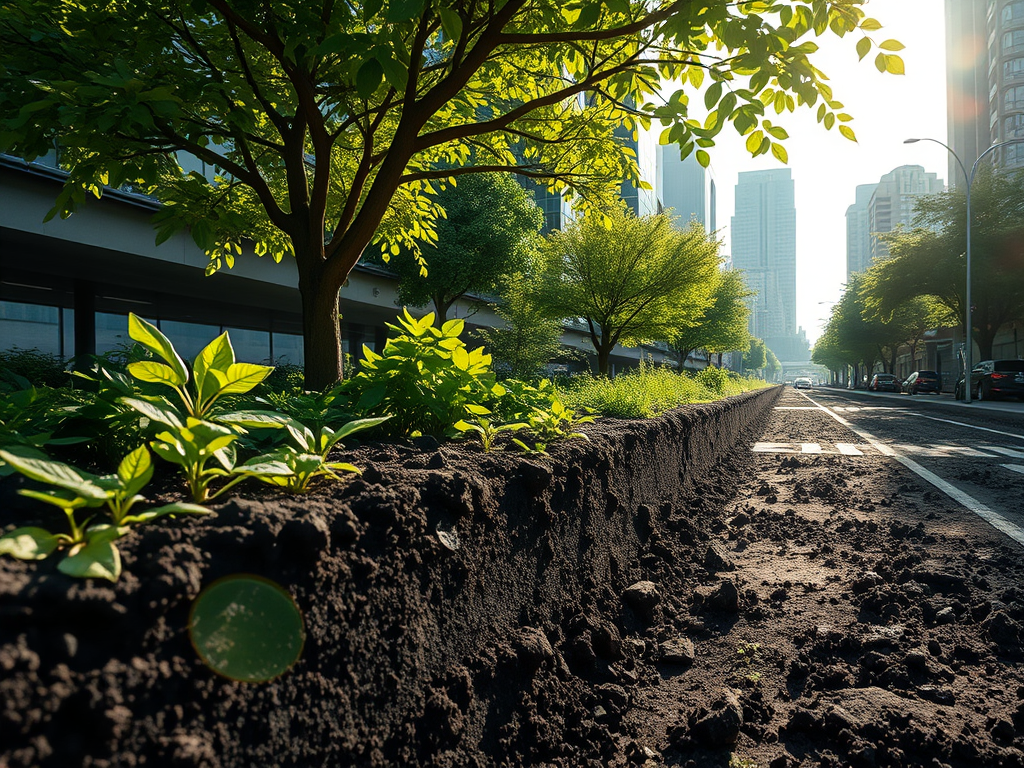
Cities worldwide are increasingly confronted with complex environmental challenges. Climate change manifests through more frequent and intense droughts and floods, alongside the persistent urban heat island effect. Simultaneously, urban soils often suffer from compaction, nutrient depletion, and contamination, collectively degrading vital ecosystem services, impacting human health, and diminishing livability. Addressing these interconnected issues necessitates innovative approaches in urban planning.One such promising material gaining significant attention is biocharBiochar is a carbon-rich material created from biomass decomposition in low-oxygen conditions. It has important applications in environmental remediation, soil improvement, agriculture, carbon sequestration, energy storage, and sustainable materials, promoting efficiency and reducing waste in various contexts while addressing climate change challenges. More. Its versatility offers a multifaceted response to these urban challenges. Biochar effectively sequesters carbon, improves both soil and water quality, and represents a valuable pathway for transforming organic waste into beneficial resources. This process inherently aligns with circular economy principles, shifting the paradigm of waste management from disposal to a “waste-to-value” system. A comprehensive understanding reveals that biochar’s benefits are synergistic; for instance, enhancing soil health can simultaneously improve water retention, reduce stormwater runoff, and support healthier urban vegetation that contributes to cooling and air quality. This integrated impact suggests that biochar can yield compounding returns across various sustainability metrics, fostering a more resilient and sustainable urban metabolism.
Biochar for Urban Use
Biochar is a highly stable, carbon-rich, and exceptionally porous material, often described as sponge-like, boasting a substantial internal surface area that can exceed 1000 square yards per gram. These unique physicochemical properties are critical for its diverse urban applications, enabling enhanced water retention, facilitating nutrient adsorption, and creating a conducive habitat for beneficial microbial communities within soils. A key attribute is its high Cation Exchange Capacity (CEC), which allows it to effectively attract, retain, and exchange positively charged nutrients like calcium and potassium, preventing leachingLeaching is the process where nutrients are dissolved and carried away from the soil by water. This can lead to nutrient depletion and environmental pollution. Biochar can help reduce leaching by improving nutrient retention in the soil. More and improving plant availability. The biochar’s pHpH is a measure of how acidic or alkaline a substance is. A pH of 7 is neutral, while lower pH values indicate acidity and higher values indicate alkalinity. Biochars are normally alkaline and can influence soil pH, often increasing it, which can be beneficial More, which varies based on feedstockFeedstock refers to the raw organic material used to produce biochar. This can include a wide range of materials, such as wood chips, agricultural residues, and animal manure. More and pyrolysis conditionsThe conditions under which pyrolysis takes place, such as temperature, heating rate, and residence time, can significantly affect the properties of the biochar produced. More, can also be strategically managed to ameliorate acidic urban soils. Produced through pyrolysisPyrolysis is a thermochemical process that converts waste biomass into bio-char, bio-oil, and pyro-gas. It offers significant advantages in waste valorization, turning low-value materials into economically valuable resources. Its versatility allows for tailored products based on operational conditions, presenting itself as a cost-effective and efficient More in an oxygen-limited environment, biochar’s characteristics are highly customizable. Feedstock selection, from woody biomassBiomass is a complex biological organic or non-organic solid product derived from living or recently living organism and available naturally. Various types of wastes such as animal manure, waste paper, sludge and many industrial wastes are also treated as biomass because like natural biomass these More yielding higher carbon content and porosityPorosity of biochar is a key factor in its effectiveness as a soil amendment and its ability to retain water and nutrients. Biochar’s porosity is influenced by feedstock type and pyrolysis temperature, and it plays a crucial role in microbial activity and overall soil health. Biochar More to agricultural residues providing richer nutrient content, significantly influences the end product. Similarly, pyrolysis conditions like temperature (higher for increased stability and surface area) and heating rate dictate its final properties. This precise control means biochar is an engineered material, allowing for its tailored design to address specific urban challenges such as heavy metal contamination or particular water retention needs, ultimately transforming urban soils into dynamic, self-sustaining ecosystems.
Transformative Impact of Biochar on Urban Landscapes
Biochar’s unique properties enable it to exert a profound and multifaceted transformative impact across various facets of urban landscapes, contributing significantly to their ecological health, resilience, and sustainability.
1. Enhancing Urban Soil Health and Plant Vitality
Biochar significantly enhances urban soils by mitigating compaction, improving aeration, and boosting water retention, which reduces irrigation needs and increases drought resilience for urban vegetation. It optimizes nutrient cycling by enhancing Cation Exchange Capacity (CEC) and fosters beneficial microbial communities, leading to improved nutrient availability and overall soil fertility. This makes biochar invaluable for urban forestry, community gardens, and agriculture, promoting faster plant growth, deeper root development, and increased crop yields. Its exceptional stability ensures long-lasting benefits, contributing to resilient urban green spaces that withstand environmental stressors and offer a cost-effective solution for sustained ecological services and carbon sequestration.
2. Revolutionizing Urban Water Management and Quality
Biochar offers a powerful solution for urban stormwater management by significantly increasing soil permeability and water infiltration, thereby reducing runoff, flooding, and sewer overflows. Its high porosity and surface area enable it to effectively adsorb a wide range of pollutants, including heavy metals, bacteria, excess nutrients, and potentially PFAS, from both water and soil, thus improving water quality. Biochar seamlessly integrates into various urban green infrastructure projects like green roofs, permeable pavements, and green walls, where it enhances moisture retention, plant growth, and pollutant removal efficiency (e.g., nitrogen in permeable pavements). Beyond carbon sequestration, biochar’s role in climate resilience—by improving water-holding capacity and drought resistance—provides a crucial dual benefit for urban adaptation. This “invisible” green infrastructure silently purifies urban waterways, protecting public health and offering a strategic advantage in urban water management.
3. Contributions to Climate Change Mitigation and Air Quality
Biochar is a compelling solution for climate change mitigation, acting as a stable carbon sink that sequesters carbon for centuries and significantly reduces greenhouse gas emissions, including potent N2O. Endorsed by the IPCC for carbon removal, it also helps mitigate the urban heat island effect by enhancing green infrastructure like roofs and walls, leading to cooler city temperatures. Beyond environmental benefits, biochar offers substantial economic value through carbon sequestration and pollution removal, potentially generating revenue via carbon credits. Its “carbon-negative” production positions it as a powerful tool for cities to achieve ambitious climate neutrality goals, transforming it into a strategic asset for urban climate policy and investment.
4. Advancing Circular Economy and Waste Valorization
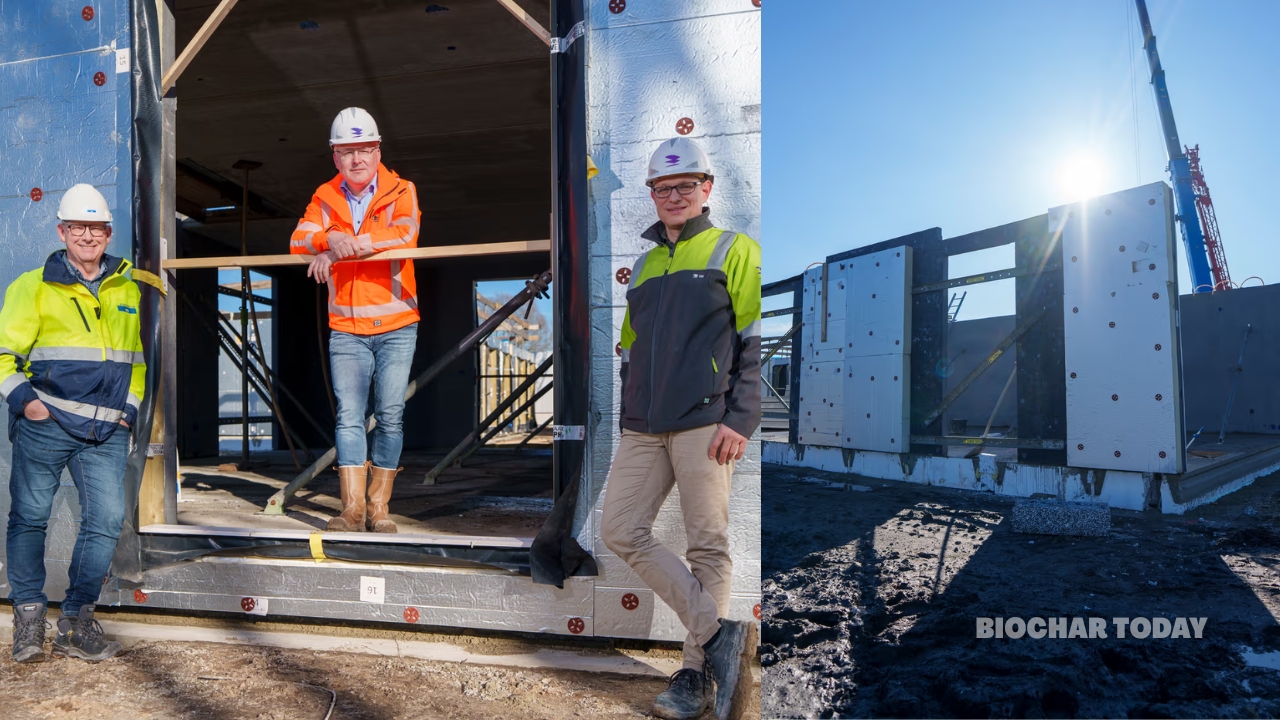
Biochar production exemplifies circular economy principles by transforming diverse urban organic waste (e.g., green waste, food waste, sewage sludge) into a valuable, carbon-rich resource. This process significantly reduces landfill burden and greenhouse gas emissions, valorizing waste and closing material loops within cities. Decentralized production facilities can utilize local waste streams, enhancing resource circularity and reducing transportation emissions. Beyond soil amendmentA soil amendment is any material added to the soil to enhance its physical or chemical properties, improving its suitability for plant growth. Biochar is considered a soil amendment as it can improve soil structure, water retention, nutrient availability, and microbial activity. More for urban agriculture and landscaping, biochar is increasingly integrated into novel building materials like cement and asphalt, offering “hard-to-abate” long-term carbon storage within the built environment. This fosters localized green economies, creates employment, and diversifies municipal revenue, bridging green and grey infrastructure for a holistic approach to urban sustainability.
Global Case Studies: Biochar in Action
Successful biochar initiatives are emerging globally, showcasing diverse implementation strategies and measurable impacts across urban landscapes. These projects serve as vital blueprints for cities aiming to integrate biochar into their sustainability efforts. Global biochar initiatives are providing compelling blueprints for urban sustainability, showcasing diverse implementation strategies and measurable impacts.
Pioneering European Initiatives: The Stockholm Biochar Project stands as a leading example, converting park and garden waste into biochar through pyrolysis. This process not only sequesters significant amounts of carbon (estimated 25,200 tons of CO2 by 2020) but also generates renewable energy for the city’s district heating network. The produced biochar is strategically used in urban green areas, including innovative structured soils for city trees, to improve soil conditions, enhance stormwater infiltration, and aid flood management. This project has received international recognition for its environmental and economic benefits.

The Helsinki Biochar Project focused on exploring practical methods for carbon sequestration and circular waste systems through increased biochar use in public green structures. It involved extensive feedstock experimentation, pyrolyzing materials like reed and woodchips, and establishing ten diverse pilot sites across Helsinki’s public parks. These applications ranged from mixing biochar into football fields for improved turf to using it in structural soil for existing oak trees and even in community garden boxes to address water retention. This project significantly advanced practical knowledge and citizen awareness, contributing to Helsinki’s ambitious carbon neutrality goals.

North American Innovations: Minneapolis is making history with the first city-owned and operated biochar facility in North America. Set to begin production in 2025, it will process over 3,000 tons of wood waste annually into over 500 tons of biochar. This project is projected to remove nearly 3,700 tons of CO2 annually, making it the city’s only existing carbon-negative initiative. The biochar will be used in community gardens, stormwater facilities, and boulevards to improve soil health, enhance drought resilience, and filter stormwater.

Beyond these major examples, numerous other pilot projects and community-led initiatives are emerging globally. These include processing forest waste into biochar to reduce wildfire risks in Nevada County, CA, developing biochar-based media for stormwater treatment in Oregon, and converting urban tree waste into biochar for green roofs and hydroponics in Birmingham, UK. Community gardens in cities like Detroit are also experimenting with local biochar production to enhance urban agriculture.
Collectively, these case studies demonstrate that cities are adopting biochar for a variety of strategic reasons, extending beyond a singular objective. Biochar’s value proposition is highly adaptable to local needs and priorities, making it a flexible tool for urban planners with diverse sustainability objectives, from waste-to-energy to climate adaptation and citizen engagement. The success of these projects, often involving multi-stakeholder collaborations across government, private industry, academia, and local communities, underscores that effective biochar implementation thrives on partnerships that leverage diverse expertise and secure community buy-in, transforming waste streams into shared community benefits.
Navigating Challenges and Barriers to Widespread Adoption
Despite biochar’s compelling benefits and growing interest, several significant challenges and barriers impede its widespread adoption in urban planning and green city initiatives. Addressing these hurdles is crucial for realizing biochar’s full transformative potential. Navigating the widespread adoption of biochar in urban planning faces several significant challenges. A primary hurdle is managing feedstock variability and ensuring consistent biochar quality. The properties of biochar, including its crucial adsorption capacity, stability, and nutrient content, are highly dependent on the diverse and often inconsistent urban organic waste streams (like green waste, food scraps, or sewage sludge) and the specific pyrolysis conditions. This inconsistency creates uncertainty for end-users and hinders broader market development, necessitating stringent quality control measures to ensure safe and effective application.
Economic viability and production scalability present substantial financial and logistical barriers. The initial capital investment for production facilities can be high, and while biochar’s market price is promising, securing consistent, high-volume feedstock supply and managing its collection, drying, and transportation adds considerable economic burden. The nascent stage of the industry and market uncertainty mean profitability often relies on “revenue stacking” from co-products and carbon credits.
Public perception, awareness, and community engagement are critical yet often overlooked barriers. A general lack of familiarity with biochar among the public, policymakers, and urban farmers slows adoption. Misconceptions, safety concerns, and a “disgust effect” (particularly for biochar derived from human waste) can impede acceptance. Furthermore, biochar’s primary benefits are largely “invisible” within the soil, making it less appealing for public funding compared to more visibly impactful urban projects. Effective and transparent communication is essential to build trust.
Finally, the absence of robust policy and regulatory frameworks is a substantial impediment. Without stringent quality control mechanisms, uniform standards, and supportive policies (like financial incentives or clear carbon pricing), there’s inherent uncertainty regarding product quality and potential risks, stifling commercialization. Existing building codes often favor conventional materials, and varying permit regulations create confusion. This regulatory “catch-22” means that despite biochar’s environmental benefits, the lack of clear, harmonized frameworks impedes its widespread use, highlighting the need for proactive policy development and targeted public education that addresses both scientific and social biases.
Best Practices and Strategic Implementation for Urban Biochar
Effective integration of biochar into urban landscapes demands a strategic and holistic approach, moving beyond simple application to comprehensive system design. A fundamental best practice involves:
- Tailoring biochar selection and application rates to specific urban contexts. This means thoroughly characterizing biochar properties (e.g., pH, porosity, nutrient content, derived from specific feedstocks and pyrolysis conditions) to precisely match it to the intended application, such as ameliorating acidic soils or enhancing stormwater filtration. Prioritizing local sourcing of biochar from urban waste streams also promotes circular economy principles and reduces costs. Application rates must be determined through comprehensive soil testing and aligned with specific plant needs and project goals, typically involving incorporation into soil or as a filter media in green infrastructure.
- Soil testing, continuous monitoring, and adaptive management cannot be overstated. Pre-application soil analysis is crucial to understand existing conditions, and regular monitoring of outcomes ensures desired effects are achieved, allowing for necessary adjustments to management strategies based on empirical data.
- Synergistic approaches significantly enhance biochar’s effectiveness. Co-application with compost creates a powerful combined effect, boosting soil fertility and microbial activity more than either amendment alone. Integrating biochar into existing or planned green infrastructure elements—such as green roofs, permeable pavements, and street tree beds—optimizes their performance in urban stormwater management and microclimate improvement.
This comprehensive approach underscores that biochar is not a standalone “magic bullet” but a powerful, data-driven component within a larger, intelligently designed urban ecosystem.
Future Outlook: Scaling Biochar for Resilient and Sustainable Cities
The trajectory of biochar research and application indicates its increasingly central role in creating resilient and sustainable urban environments. Research is rapidly expanding, focusing on key areas like enhanced soil functionality, advanced water and air treatment, sustainable waste management, and bioenergy production. Innovative applications are continuously emerging, including lignin-treated biochar for CO2 uptake, ameliorating salinity and drought stress, immobilizing toxic metals, and its use in advanced oxidation processes for persistent organic contaminants. Biochar is also gaining traction as an electrode material in microbial fuel cells and is being integrated with other green clean-up methods like phytoremediationThis is a technique that uses plants to clean up contaminated soil or water. Biochar can enhance phytoremediation by improving soil conditions and promoting plant growth, allowing plants to absorb and break down pollutants more effectively. More.
The global biochar market is experiencing robust growth, projected to reach nearly $3.3 billion by 2025, largely driven by its recognized role in Carbon Dioxide Removal (CDR) and its extensive environmental co-benefits. Voluntary carbon markets are providing crucial funding and validation through carbon credits. Policy frameworks are essential for accelerating adoption, encompassing financial incentives, regulatory certainty, and integration into urban planning guidelines. The IPCC’s endorsement of biochar as a viable and scalable CDR technology further underscores its importance in global climate strategies. Interdisciplinary collaboration is vital to fully realize biochar’s potential, bridging expertise across various scientific and planning domains.
While the rapid growth and market projections indicate a strong future, realizing this scaling potential critically depends on overcoming existing barriers, particularly policy gaps, economic viability concerns, and challenges in public acceptance. Biochar’s diverse and evolving applications—from soil amendment to water filtration, air pollution control, waste management, bioenergy, and even advanced materials—suggest it functions as a versatile “platform technology.” Its fundamental properties make it highly adaptable to numerous urban challenges, positioning it at the heart of future smart and green city initiatives, offering multi-functional solutions for carbon storage, cleaner water, and healthier soil, ultimately contributing to a more sustainable future.
Biochar offers a transformative, multi-faceted solution for urban environments, providing significant environmental, social, and economic benefits. Its unique properties enable it to improve urban soil health, revolutionize water management (reducing runoff and filtering pollutants), and substantially contribute to climate change mitigation through carbon sequestration and urban heat island reduction. Biochar also advances circular economy principles by converting urban organic waste into valuable resources, including novel building materials, fostering localized green economies. While its widespread adoption faces challenges like feedstock variability, economic viability, public perception, and regulatory gaps, overcoming these requires robust frameworks and collaborative efforts. Based on this, specific recommendations are crucial for urban planners and policymakers to accelerate biochar integration into sustainable urban development.
- Invest in Localized Biochar Production: Prioritize the development of decentralized biochar production facilities that utilize local urban organic waste streams, such as tree trimmings and park waste. This approach reduces landfill burden, minimizes transportation emissions, and creates local value and employment opportunities within the city.
- Develop “Fit-for-Purpose” Biochar Strategies: Emphasize the critical importance of biochar characterization and selection tailored to specific urban applications. This necessitates mandating comprehensive soil testing and implementing adaptive management practices to ensure the optimal type and application rate of biochar are used for particular soil types, target pollutants, and plant species.
- Integrate Biochar into Green Infrastructure Standards: Incorporate biochar as a standard, specified component in the design and construction guidelines for urban green infrastructure projects, including green roofs, permeable pavements, street tree pits, and urban agriculture initiatives. This should be reflected in municipal guidelines and building codes.
- Establish Supportive Policy and Regulatory Frameworks: Advocate for the development of clear, harmonized regulations and quality standards for biochar production and application. Implement financial incentives, such as carbon credits, subsidies, and tax breaks, to de-risk investments and accelerate widespread adoption by making biochar economically more attractive.
- Prioritize Public Education and Engagement: Launch comprehensive public awareness campaigns to disseminate accurate information about biochar’s benefits and address common misconceptions. Foster community participation in biochar initiatives, particularly in waste collection and local application projects, to build trust and ensure long-term societal acceptance.
- Foster Cross-Sectoral Collaboration: Encourage and facilitate partnerships between municipal governments, private industry (including waste management, construction, and energy sectors), academic institutions, and community organizations. This collaborative ecosystem can leverage diverse expertise, resources, and innovation for developing integrated biochar solutions.
- Support Research and Development: Continue to fund urban-specific biochar research, focusing on optimizing application methods, exploring novel materials (e.g., biochar-microbe composites), and conducting long-term assessments of environmental and economic impacts in diverse urban contexts. This ongoing research is vital for refining best practices and unlocking new applications.
References
Liao, W., Halim, M. A., Kayes, I., Drake, J. A., & Thomas, S. C. (2023). Biochar benefits green infrastructure: global meta-analysis and synthesis. Environmental Science & Technology, 57(41), 15475-15486.
Azzi, E. S., Karltun, E., & Sundberg, C. (2022). Life cycle assessment of urban uses of biochar and case study in Uppsala, Sweden. Biochar, 4(1), 18.
Senadheera, S. S., Withana, P. A., Lim, J. Y., You, S., Chang, S. X., Wang, F., … & Ok, Y. S. (2024). Carbon negative biochar systems contribute to sustainable urban green infrastructure: a critical review. Green Chemistry.
Santamouris, M. (2014). Cooling the cities–a review of reflective and green roof mitigation technologies to fight heat island and improve comfort in urban environments. Solar energy, 103, 682-703.
El Afandi, G., Irfan, M., Moustafa, A., Ibrahim, S., & Sapkota, S. (2025). A Review on Carbon-Negative Woody Biomass Biochar System for Sustainable Urban Management in the United States of America. Urban Science, 9(6), 214.
Niu, G., He, C., Mao, S., Chen, Z., Ma, Y., & Zhu, Y. (2024). Enhanced soil fertility and carbon sequestration in urban green spaces through the application of Fe-Modified biochar combined with plant growth-promoting bacteria. Biology, 13(8), 611.
Pavesi, R., Orsi, L., & Zanderighi, L. (2025). Enhancing Circularity in Urban Waste Management: A Case Study on Biochar from Urban Pruning. Environments, 12(1), 1-21.
Khan, S., Irshad, S., Mehmood, K., Hasnain, Z., Nawaz, M., Rais, A., … & Ibrar, D. (2024). Biochar production and characteristics, its impacts on soil health, crop production, and yield enhancement: a review. Plants, 13 (2): 166.
Ouedraogo, A. S., Yuzhu Fu, G., & Yunus, A. I. (2023). Treatment of highway stormwater runoff using sustainable biochar: A review. Journal of Environmental Engineering, 149(2), 03122005.
Reddy, K. R., Xie, T., & Dastgheibi, S. (2014). Evaluation of biochar as a potential filter media for the removal of mixed contaminants from urban storm water runoff. Journal of Environmental Engineering, 140(12), 04014043.
Rizzo, G. F. (2015). Use of biochar geostructures for urban stormwater water cleanup.
Pavesi, R., Orsi, L., & Zanderighi, L. (2025). Enhancing Circularity in Urban Waste Management: A Case Study on Biochar from Urban Pruning. Environments, 12(1), 1-21.
Tisserant, A., & Cherubini, F. (2019). Potentials, limitations, co-benefits, and trade-offs of biochar applications to soils for climate change mitigation. Land, 8(12), 179.
Rodriguez Franco, C., Page-Dumroese, D. S., Pierson, D., Miller, M., & Miles, T. (2024). Policy and regulations for mobile biochar production in the United States of America. Forests, 15(1), 192.
Nordregio. (2019). Stockholm Biochar Project | Nordregio. https://nordregio.org/sustainable_cities/stockholm-biochar-project/


Leave a Reply