
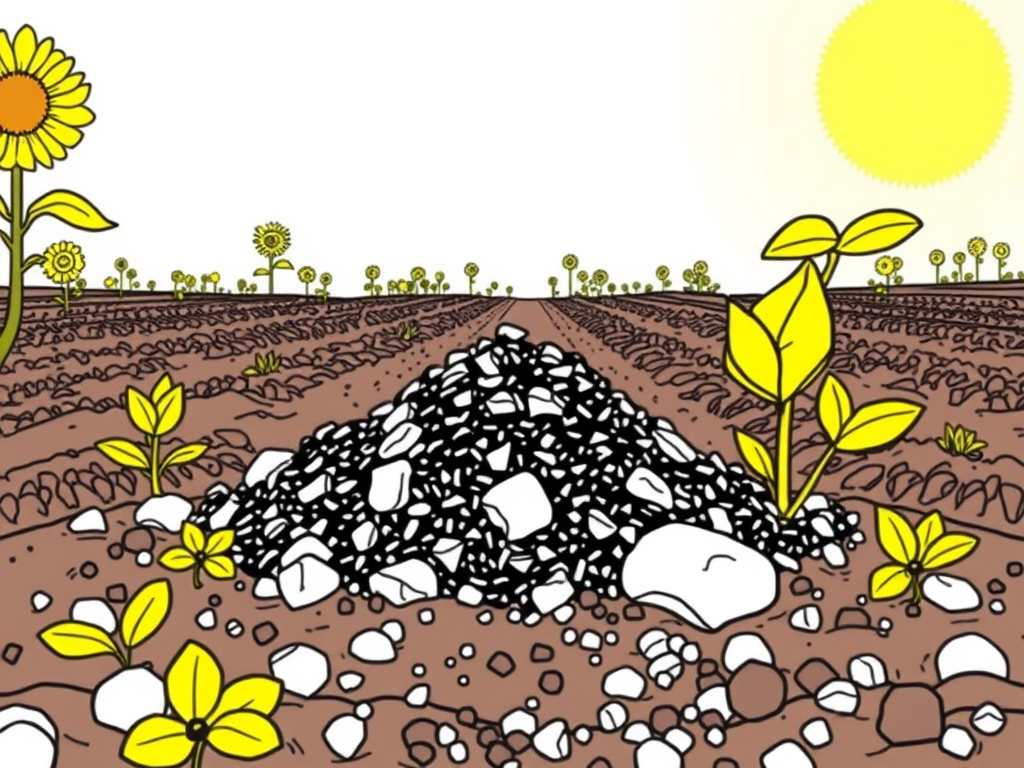
In the face of increasing global concerns about food security and climate change, a recent review published in the Journal of Scientific Research and Reports highlights biocharBiochar is a carbon-rich material created from biomass decomposition in low-oxygen conditions. It has important applications in environmental remediation, soil improvement, agriculture, carbon sequestration, energy storage, and sustainable materials, promoting efficiency and reducing waste in various contexts while addressing climate change challenges. More as a promising solution. Biochar, a carbon-rich material derived from organic waste, is gaining recognition for its potential to rehabilitate degraded soils, boost agricultural productivity, and play a significant role in climate change mitigation. This review delves into the multifaceted benefits of biochar, exploring its production, properties, and interactions with the soil and plant systems, while also addressing the challenges and future directions of biochar utilization in agriculture and environmental management.
The review emphasizes that current agricultural practices, characterized by the overuse of chemical inputs and unsustainable farming methods, have contributed significantly to soil degradation, loss of biodiversity, and reduced crop yields. Biochar emerges as a potential game-changer by offering a sustainable approach to improve soil health and sequester carbon.
Biochar’s production process, involving the pyrolysisPyrolysis is a thermochemical process that converts waste biomass into bio-char, bio-oil, and pyro-gas. It offers significant advantages in waste valorization, turning low-value materials into economically valuable resources. Its versatility allows for tailored products based on operational conditions, presenting itself as a cost-effective and efficient More of organic biomassBiomass is a complex biological organic or non-organic solid product derived from living or recently living organism and available naturally. Various types of wastes such as animal manure, waste paper, sludge and many industrial wastes are also treated as biomass because like natural biomass these More under limited oxygen conditions, results in a material with unique physicochemical properties. These properties, including high surface area, porosityPorosity of biochar is a key factor in its effectiveness as a soil amendment and its ability to retain water and nutrients. Biochar’s porosity is influenced by feedstock type and pyrolysis temperature, and it plays a crucial role in microbial activity and overall soil health. Biochar More, cation exchange capacity, and stable carbon content, contribute to biochar’s ability to enhance soil fertility, improve water retention, and promote microbial activity.
The review further explores how biochar’s application to soil can positively influence soil physical, chemical, and biological properties, creating a more favorable environment for plant growth. This ultimately leads to increased nutrient availability, improved water holding capacityWater holding capacity is the amount of water that soil can retain. Biochar can significantly increase the water holding capacity of soil, improving its ability to withstand drought conditions and support plant growth. More, and enhanced stress tolerance in plants.
Beyond its benefits to soil health and agricultural productivity, biochar plays a crucial role in carbon sequestration, offering a long-term solution to mitigate climate change. The stable carbon in biochar can persist in the soil for centuries, effectively removing carbon dioxide from the atmosphere. Moreover, biochar application can reduce the emission of other greenhouse gasses from the soil.
In addition to exploring biochar’s benefits, the review acknowledges the challenges associated with its widespread adoption, including variability in biochar properties and the need for scaling up production and application.
Overall, this review paints a compelling picture of biochar as a “black gold” capable of restoring degraded soils, promoting sustainable agriculture, and contributing to climate change mitigation. Sources
Source: P, Ashoka, Subedar Singh, P. A. Ramsem, Lalita Kumar Mohanty, Hari Shankar Singh, Sabarinathan Babu, Narinder Panotra, Kamal Kishore, Sweeta Manhas, and Sahil Chauhan. 2025. “The Black Gold: How Biochar Can Save Our Soils and Climate”. Journal of Scientific Research and Reports 31 (5):784-98.




Leave a Reply