
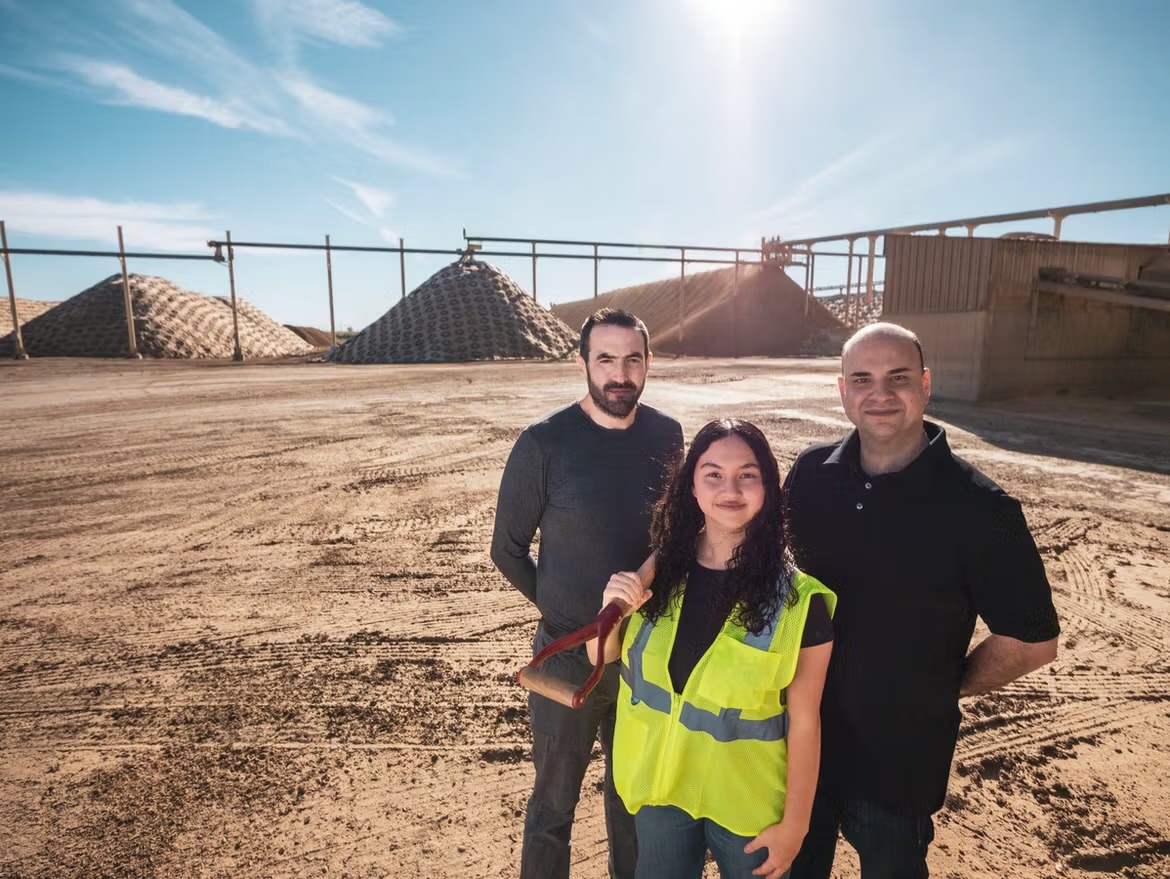
At just 16 years old, Harper Moss is leading Carbonzero.eco, a regenerative farming startup focused on carbon sequestration through biocharBiochar is a carbon-rich material created from biomass decomposition in low-oxygen conditions. It has important applications in environmental remediation, soil improvement, agriculture, carbon sequestration, energy storage, and sustainable materials, promoting efficiency and reducing waste in various contexts while addressing climate change challenges. More. Inspired by a design class and a social entrepreneurship program, Moss launched the company to address environmental challenges using systematic thinking.
Carbonzero.eco takes agricultural waste, specifically almond shells, and processes it through pyrolysisPyrolysis is a thermochemical process that converts waste biomass into bio-char, bio-oil, and pyro-gas. It offers significant advantages in waste valorization, turning low-value materials into economically valuable resources. Its versatility allows for tailored products based on operational conditions, presenting itself as a cost-effective and efficient More to create biochar—a carbon-rich material that can be stored in soil for up to 1,000 years. Instead of decomposing in landfills and releasing emissions, the almond shells become a valuable soil amendmentA soil amendment is any material added to the soil to enhance its physical or chemical properties, improving its suitability for plant growth. Biochar is considered a soil amendment as it can improve soil structure, water retention, nutrient availability, and microbial activity. More that improves crop yields and soil health.
The startup is strategically located in Williams, California, where it sources almond shells from hundreds of farms, reducing transportation emissions. Farmers then purchase the biochar to enhance their soil, creating a closed-loop system that supports both sustainability and productivity.
Backed by $3.5 million in seed funding from executives at Google, Amazon, and Meta, Carbonzero.eco has already secured over $7 million in contracts with California almond farmers. The company aims to produce 30,000 tons of biochar annually, mitigating 1.5 million tons of CO₂ emissions.
Moss sees biochar as a key player in regenerative agriculture and carbon sequestration. With operations set to begin in May, Carbonzero.eco is poised to make a significant impact on sustainable farming and climate resilience.




Leave a Reply