
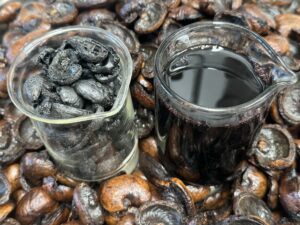
A team of researchers from the Korea Institute of Energy Research (KIER), led by Dr. Choi Young-chan, has developed a sustainable method to convert cashew nut shells into biofuel and biocharBiochar is a carbon-rich material created from biomass decomposition in low-oxygen conditions. It has important applications in environmental remediation, soil improvement, agriculture, carbon sequestration, energy storage, and sustainable materials, promoting efficiency and reducing waste in various contexts while addressing climate change challenges. More using a novel pyrolysisPyrolysis is a thermochemical process that converts waste biomass into bio-char, bio-oil, and pyro-gas. It offers significant advantages in waste valorization, turning low-value materials into economically valuable resources. Its versatility allows for tailored products based on operational conditions, presenting itself as a cost-effective and efficient More process. Cashew nut shells, a by-product of food manufacturing, contain 40% high-calorie oil, making them a promising biomassBiomass is a complex biological organic or non-organic solid product derived from living or recently living organism and available naturally. Various types of wastes such as animal manure, waste paper, sludge and many industrial wastes are also treated as biomass because like natural biomass these More source, especially in Southeast Asia.
Traditional mechanical pressing methods for extracting biofuel from these shells are inefficient, yielding only 20% of the raw material and requiring environmentally harmful chemicals like sulfuric acid. In contrast, the new medium-temperature pyrolysis technology streamlines production, doubling the yield to 40% while cutting production time by two-thirds.
The process involves a single automated pyrolysis step, reducing operational costs by half and eliminating the need for multiple manual steps. Non-condensed pyrolysis gases are reused as a heat source, improving overall efficiency. The resulting bio-heavy oil meets International Maritime Organization (IMO) sulfur emission standards, positioning it as a viable fuel for ships.
Additionally, the by-product, biochar, has high carbon content and can replace coal in power plants or steel mills, offering further environmental benefits.
With plans to pilot the technology by 2025, the team envisions large-scale adoption, particularly in Southeast Asia, where cashew shell waste is abundant. The project highlights a sustainable pathway for biofuel production, supported by funding from KIER.
LEARN MORE: Discarded nut shells transformed into biofuel and biochar


Leave a Reply